
Podcast 259: Support the Resistance – An Herbalism Clinical Skill
When you’re using your herbal skills to help others – whether you’re doing that as a Clinical Herbalist in private practice, volunteering in your community, or even just caring for your own family – it becomes obvious pretty fast that your herbal knowledge is only part of the skillset you need.
You also need to creatively adapt what you know, so that it will actually work in that person’s life. Since every body is different, different strategies work for different people. Holistic herbalists are never trying to present “one right way” that everyone has to adhere to.
Which means that as herbalists, we need to be creative and flexible. We need to match our strategies to each person’s life individually – and that creativity can be challenging!
That’s one of the skills that we teach in our Clinical Skills course. Today’s episode is a segment of content on this topic, from that course, which we wanted to share with you. It’s self-contained, but it’ll also give you a peek into what our course material sounds like.
When we talk to a client, we listen to their health goals and priorities. We also form our own understanding of the case, and our own thoughts about what to prioritize – which herbs and interventions to try first. Here’s the thing: their priorities are more important than ours! If we discern some fundamental factor they aren’t aware of, it’s our job to teach them why it’s a priority. It’s our job to educate and negotiate – not to dictate.
Sometimes we’ll propose an idea and the client will be uncertain, or will outright reject it. When this happens, it’s not helpful to insist they follow our instructions. That’s not the relationship we have as herbalists – we’re not doctors, giving “orders”. So when the client expresses some resistance, we respect it. That respect may look like offering more information and context, or it may look like going in another direction entirely.
The motto for this mindset is: Support the resistance.
It’s easier said than done – but learning to do it is something we consider essential to the herbalist’s skillset.
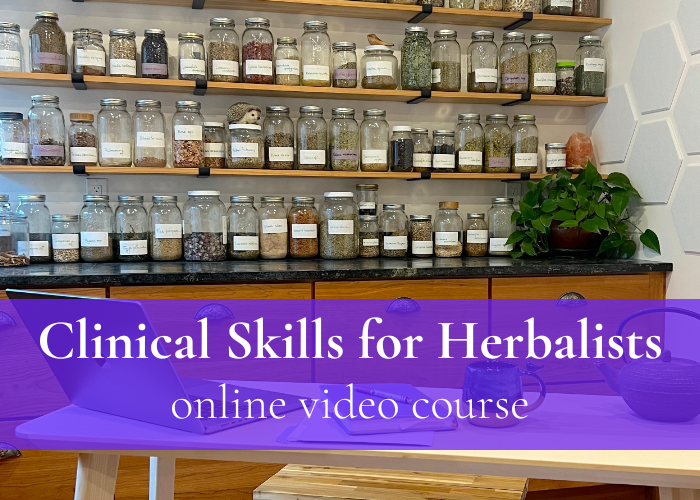
If this episode caught your attention, then our Clinical Skills course is for you! Learn to practice legally, safely, collaboratively, and effectively. Get all your client forms & scheduling systems sorted. Cultivate consultation interview skills, and explore methods for planning personalized protocols. Everything you need to be a top-notch herbalist!
Like all our offerings, this self-paced online video course comes with free access to twice-weekly live Q&A sessions with us, lifetime access to current & future course material, open discussion threads integrated in each lesson, an active student community, study guides, quizzes & capstone assignments, and more!
If you have a moment, it would help us a lot if you could subscribe, rate, & review our podcast wherever you listen. This helps others find us more easily. Thank you!!
Our theme music is “Wings” by Nicolai Heidlas.
Episode Transcript
Katja (00:15):
Hi, I’m Katja.
Ryn (00:16):
And I’m Ryn.
Katja (00:17):
And we’re here at Commonwealth Holistic Herbalism in Boston, Massachusetts.
Ryn (00:20):
And on the internet everywhere, thanks to the power of the podcast. Yeah, thanks, the internet. You are still useful for some stuff.
Katja (00:28):
So, today we are filming some new material for the Clinical Skills course. And there was a segment that I really loved, and I wanted to share with y’all. So, we’re going to do that. But first we should do our reclaimer.
Ryn (00:45):
Yeah. That’s where we remind you that we are not doctors. We are herbalists and holistic health educators.
Katja (00:50):
The idea discussed in this podcast do not constitute medical advice. No state or federal authority licenses herbalists in the United States. So, these discussions are for educational purposes only.
Ryn (01:02):
We want to remind you that good health doesn’t mean the same thing for everyone. Good health doesn’t exist as an objective standard. It’s influenced by your individual needs, experiences, and goals. So, please keep in mind we’re not attempting to present a single, dogmatic right way that you should adhere to.
Katja (01:18):
Everyone’s body is different. So, the things that we’re talking about may or may not apply directly to you. But we hope that they’ll give you some new information to think about and some ideas to research and experiment with further.
Ryn (01:29):
Finding your way to better health is both your right and your own personal responsibility. That doesn’t mean you’re alone on the journey, and it doesn’t mean that you’re to blame for your current state of health. But it does mean that the final decision, when you’re considering any course of action, whether it was discussed on the internet or prescribed by a physician, that’s always your choice to make. Yes.
Katja (01:49):
All right. So, in the Clinical Skills course… It’s a huge course. There’s more than 60 hours of videos plus so many activities and all kinds of stuff in there. But I really feel like that course is like a mirror of the reclaimer in some ways. And especially what we were talking about today, which really goes around this idea of not being dogmatic. Not trying to present one single right way, because every body is different. And so great. Those are words that we say every time we do a podcast. I would love to say words that we say every week, but we don’t quite manage to do the podcast every week. So, we say it every time we make a podcast.
Ryn (02:34):
But even still, what does that mean? How does that show up in our work? How does that show up in a client session?
Katja (02:41):
What does it look like? Yeah. So, that’s what we are talking about in this clip that we will show you now. Or hear you, listen, play for you now.
No Single Right Way: Support the Resistance!
Ryn (02:52):
Play for you now. So, as you’re proposing to this person a different goal or a revised goal, it’s important that we’re not dictating to them. So, they come in. They have the Lyme example. And we say oh, that’s so stupid. Why would you think that? Listen, here’s what you need to think of as the ideal. This is what’s going to happen for you instead of that ridiculous idea you came in with.
Katja (03:17):
Or even oh, that’s never going to work because Lyme just doesn’t work that way. Okay, well, we might not say it that way to the client, right, because it’s really brushing off their concern.
Ryn (03:27):
Yeah. And this is also about how it’s not going to be they come in. They’re talking about their fatigue. They’re hoping for some herbs to give them energy. And we say oh, that’s totally wrongheaded. What you need to do is focus on sleep. So, I’ve got a sleep formula for you, and we’re going to talk about sleep hygiene for the next hour. And they’re over there like what? I don’t want to sleep more. I want to have more energy. What are you talking about? Yeah. So, that would be you being like in your mind, it all makes sense. From your side of things, it’s all clear. You understand why this is the direction you want to go in. But you haven’t gotten that across to them.
Katja (04:02):
Right. Because you’ve spent years training yourself and gathering all the knowledge that you need so that you can look at that problem and in the one moment go from A to Z, right? Like in your head it’s very clear. But now the job is we need to get that across to the client, and that’s going to require some teaching and some negotiation, right?
Ryn (04:26):
Because even if we teach them. And they totally understand what we have to say about the importance of sleep, and how yes, that is connected to your energy level day-to-day. And wouldn’t you believe it, right? Even if they get it, they still might not want to change that particular habit, right? They’re like I don’t want to go to bed early. I like to stay up for a little while after everyone else goes to bed. And maybe I just need to spend more time with my cats in the dark house. That’s fine, right? So, maybe some people might feel that way from time to time.
Katja (05:00):
Right. But it doesn’t mean that there’s nothing we can do. If a person says nope, not going to bed earlier. I’m sorry. I need that time at the end of the day. Okay, that gives us a clear boundary. Kind of like you know those toys that you wind them up. And they go, and they go, and then they bounce off a wall and go in the other direction. Okay. Well, when they put a boundary like that in place, that’s our cue to go in the other direction, right? There are so many other things we can do. And sure, are they going to be the most ideal thing in our opinion of how we would handle this case? Maybe not. But in the end, this case is the client’s life. They’re the ones who get to pick how their life goes, right? They’re the ones who get to decide that.
Ryn (05:50):
Yeah. So, the motto for this idea is support the resistance. Support the resistance. Viva la resistance.
Katja (05:57):
That seems really easy when you’re like support the resistance. Oh, I need to support this person’s fever so that they can resist the pathogen, right? That seems so easy. But when support the resistance is there’s no way I’m going to bed early. And also I’m eating gluten and dairy every single day, so just forget it.
Ryn (06:17):
So, good luck helping me.
Katja (06:18):
What else you got? Okay. When that’s the resistance, sometimes it is hard to support that. Sometimes it is hard to say all right, no problem. Let’s go in a different direction. Because you’re over there thinking, or I’m in here thinking aargh I don’t know how. I get like… you’re just aargh, right? And it doesn’t have to be gluten, or dairy, or sleep. It could be whatever the favorite thing is. Whatever you think the most impactful thing is, but then they have just totally shut down. And so yeah. You can feel like how can I support this? This is the most important thing. And then we just have to remember nope. My most important thing, I can do that on my own time. I can do my own most important thing in my life. We’re talking about their most important thing. And I just spent all this time getting educated so that I could be creative, flexible, and able to help them with whatever their most important thing is. All right, I’m ready to do this, right?
Offer Up a Buffet of Choices
Ryn (07:23):
Yeah. So you know, as we’re talking to the client, our job is basically to take our knowledge about what we understand about herbs, and health, and everything else. And understand their case as well as we can. And then say okay, here are a number of things that I think might help. So, I can kind of give them a buffet menu, right? And I can say well, we can make some changes in this column around food, and this column around sleep, and this one around movement, and that one over there around community. And I think each of these things could help you. I’ll give you a brief explanation about why they would help. Tell me which of these is most appealing. Tell me which of these you don’t want me to say another word about. You can literally say that exact sentence to your client. And it’s worth trying. It’s worth doing.
Katja (08:13):
Yeah. I also feel like when clients know that you are willing to listen to them say don’t say another word about that. I’m not doing it. Yeah. And they know ahead of time that you are prepared to hear that. It removes so many roadblocks. Actually, when you tell the client that you are willing for them to say absolutely not. What else do you have? There is like this freeing thing that happens for a client. Because they realize that is such an invitation to collaboration. That is such an invitation for them to be in control of a situation. And they realize that. And you can see it in their bodies when they’re like oh. I can say no? Great. And then with that relaxation, it actually enables them to say yes to things that they maybe might not have considered previously to that. Because now they realize this is my choice. Maybe I could choose that actually, you know? Yeah. It’s powerful.
Ryn (09:26):
Yeah. So, we want to give people the options. Maybe not literally every option you could ever conceive of. But a relevant selection, things that you do believe would have a significant impact for them. Yeah, right? We want to lay those out. When you’re doing that, you do want to do that out loud as much as you can, right? Like I said, maybe not every single thought that comes into your mind or every little idea you scribbled in the corner of your notes needs to come forward. But you want to make it as much in their hands as possible. And that includes…
Katja (09:59):
Right. Like this is about giving them access to the information. If you just keep it all in your head, they don’t know how you’re getting from A to B to K. And so the more out loud that you can be, the more that you’re jacking them into your thought process.
Ryn (10:17):
Yeah. And even if you are thinking to yourself well, this recommendation would be good, and it would be effective. But I see a roadblock. I see a reason why this person might not be into it, or why they might not be able to commit to it fully. So, I’m just going to not mention it at all. We advise against that, right? A concrete example. You’re talking to somebody, and they’re describing their digestive discomfort. And you can see the rash on their arm. And they’re talking about their mental anxiety being really bad. And you’re like food allergy triangle, food allergy triangle. I’ve got to get this person off of all the food allergens as soon as I can. Ahh. But they’re also talking about their high-stress job, and their family situation, and their shaky living conditions, and stuff like that. And you’re like boy, they’re really stressed out, and diet changes are hard. And I don’t know if they could really take it. So, maybe I shouldn’t mention that right now. I don’t know. Not a good idea. Not a good idea.
Katja (11:18):
Yeah. It is really better to mention it and let them tell you if they don’t want it. Because you literally never know what they want. So, don’t take a ton of time. But just say okay, so what I’m seeing here is that there are likely some food sensitivities going on that are contributing to these problems. And I do think that it would be worth it to talk about making some changes to your diet as an experiment to see if we could shift this situation. I really do think that it would have a lot of impact. However, I also hear that you’re really stressed out right now, and sometimes changing food is really hard. So, if changing food sounds interesting to you, we can talk about that more. But if that seems too hard right now, I have a lot of other strategies that we could go with. And then you just back up and let them tell you what is interesting to them.
Ryn (12:15):
See, this is, this is, again, being as transparent as possible about what’s happening inside your own mind, right? Like in the way you put that just now, it wasn’t just now I will explain the relevance of a food intolerance to your symptoms. You add that, and also I’m concerned that the amount of stress you’ve got is going to be a roadblock to it. You are there giving them the recognition that you’re considering their actual life. That you’re thinking about the difficulty level of any given intervention, right? You are bringing them along with you through that thought process.
Katja (12:48):
And then you might be surprised, because they might say you want to know what? It hurts so bad that I’m willing to try anything at this point. I don’t even care how hard it is. And they also might say wow, thank you. You’re right. I don’t think I can change food right now. Please tell me what the other options are. And then you have so much space to gut heal tea, and stress reduction, and can we try eating earlier before bed, and can we this and that. There are so many other directions to go in. And if they still need cinnamon buns, that’s okay.
Provide Clear & Realistic Expectations
Ryn (13:24):
Yeah. All right. And so when you’ve come to a plan together, you’ve come to a set of goals that make sense and a plan to achieve them, another thing we find really helpful is to be as clear as we can about what kind of changes they can expect, right? That requires you to be realistic and to not over promise. Because that is one of the best ways to lose somebody’s confidence is to overpromise and then under deliver.
Katja (13:52):
Also, it makes you sound like a quack. You sound like a hoax if you’re like this is going to work in a month. Listen, some things do work in a month. It is completely reasonable to say I think that if you do a Whole30, whatever the strategy is, that by the end of that month you will really be able to tell if this is worth it. I think that you will see sufficient improvement that it will motivate you to continue. And if you don’t, then that is a good indication for us that we need to go in a different direction. That is not saying all your problems will be gone with one Whole30. But it is saying okay, you should expect some progress. Here’s how much progress we should expect, you know?
Ryn (14:41):
Yeah. If possible, we can try to give a timeline too, right? That’s kind of baked into some of the things you were just saying. Give it a month before you leap to conclusions about whether this is worth doing or not, right? I’m such a huge advocate nowadays for before and after photos if there’s any visible indication at all of what the person is experiencing. Even fatigue, that shows up on the face, right? I know. So yeah. Anything like that that we can share with them so that they can see the changes, so that they can document the changes. So that they have some idea of how long they need to stick with a thing before they go looking for the changes, right?
Katja (15:21):
Right. If you can’t do before and after pictures, then some kind of quantifiable thing, like we were talking about earlier. You can read three pages? Okay. Can you read five pages? Or I have a headache that makes me go to bed before 8:00 PM five nights a week. Okay. Five nights a week. Can we get to four nights a week? Can we get to three nights a week? That is still a snapshot, right? It’s not a photograph. It’s not a picture. But it is like an image that is clear and comparable. Yeah.
Ryn (15:57):
Nice. And along with this, we’re being clear with the client about what work is expected of them to get those results. And so that often just sounds like well, listen. I think if you take a 10-minute walk after each meal for the next month, then when you go to the doctor’s appointment that you’re telling me about, I would expect to see reductions in blood pressure, in blood sugar, maybe in the HbA1c even, right, some other markers like that. But if you do that for two days and then fall away from the habit, you’re not going to get that change. If it becomes one 10-minute walk instead of three each day, maybe some improvement, maybe not a big measurable shift, maybe not something significant. And of course, we can make a similar structure for a diet shift, or going to bed earlier, or whatever. If you go to bed, if you get an hour more of good sleep every night for the next month, I think you’ll feel like a whole different person. If it’s 10 minutes difference, it’s probably not going to feel like much.
Katja (16:56):
I think that part is really important, right, to give them both ends of the spectrum. Because yes, any improvement is improvement. Any amount of effort that you can put in, you have put in some effort. But there is a minimum threshold. And if you’re not at least getting up to that minimum threshold, nothing’s really going to happen. And if they don’t know that. If they go away thinking I’ll just give it my best shot. I’ll just do it sometimes. And this happens to come back to food, this happens with food a lot. Because they say well, I’ll just be gluten-free as often as I can.
Ryn (17:36):
I’ll do a reduction.
Katja (17:37):
Yeah. But then they end up that at least one meal a day is still gluten. Like it’s still bread and cheese at least one meal a day. And so at this point, they’ve just wasted all that effort. Because they’re restricting for two meals, but then the third meal they have the thing. Which means there’s no day that they’re able to actually make any kind of progress. So, telling somebody okay, if this seems like it’s going to be hard for you, let’s see if we can get a full six days. And then on Sunday you can eat whatever you want. Okay. Because at least that way we get better data. Six days and then if they eat whatever they want, the likelihood that they’re going to feel bad after eating whatever they want is higher. And that’s feedback for them to recognize oh, I should work harder on this. It’s motivating for them when they see that. But if they don’t get even through one whole day, they’re missing out on that feedback. Giving those boundaries helps people to understand what their minimum threshold requirement is. And it also helps people to understand that if they can’t meet that minimum threshold, then in the follow-up visit we need a different plan. Because actually, I thought this was going to fit in my life. It actually doesn’t fit in my life. What else is there?
Ryn (18:59):
Right. Yeah. There are some cases where you’re going to have work to do as well in the time before your next session with somebody or like that. So, when that’s the case, you want to be clear with them about that too, right? That might be all right, we’re working on an illness that I haven’t encountered before. And I’ve got some basic ideas for you to start out with. But I’m going to go and I’m going to learn more about that. I’m going to talk to some herbal friends of mine and see if they’ve got ideas around this one. And I’ll come back to you, and we’ll continue forward from there. That’s part of the same idea about being clear about the priorities and the goals and helping us all to move toward them. Extending out past that is what are we going to address in the future? So, this is most relevant when somebody has lots of different problems going on at once, right?
Katja (19:50):
Which is basically everybody.
Plan to Continuously Adapt
Ryn (19:51):
It’s basically everybody, yeah. The person with just the runny nose, they’re having it pretty good. But it’s like okay, part of the priority setting is going to be we set this aside for the moment, right? These two, these three issues are affecting your life every single day. They’re really severe. They just bother you more than the others. Sometimes that’s not the most severe thing a person’s dealing with, but in any case, we’re going to focus on this now. And often it’s like yeah, I expect the things we do to impact these symptoms most. They’re probably going to have some effect on these other ones as well. But we’re letting that happen. We’re not driving on that specifically at the moment. But when we come back next time, assuming that things go as expected, and you get, you know, significant improvement in A, B, and C. Then all right, then we’ll turn to these ones. Basically being clear that I haven’t forgotten your other problems, right? That we’re not only focusing on this one issue. We’re just giving it our attention now for the next month, or season, or whatever it is. We’re going to come to those others as time allows.
Katja (21:02):
You know, also in terms of addressing in the future, I think there’s a real benefit to acknowledging that the work you’re doing today you will also be addressing in the future. And so okay, we’re going to do this month. We’re going to see what happens, and we’re going to make adjustments. Maybe the client is a little uncertain. But they’re like I don’t know, but I’m going to… I’ll try. Okay. Well, in that case, the work that we’re going to address in the future is okay. You are going to try it for a month. If this does not work out, there are other options. We will make modifications, we’ll make adjustments so that this can work. So that something can work even if we decide this to throw this strategy out, whatever. Making it clear that this isn’t either you’re going to do this and succeed or nothing. Making it clear that this is about making adjustments, making refinements, adding to, subtracting from, whatever the equation until we get you where you want to be.
Ryn (22:12):
Yeah. This is the acknowledgement that adaptability is a critical part of our work, right, and not just once. Like not just in the sense of adapting the way you frame the information or the specifics of the protocol that you plan out for that client based on their energetics, and their preferences, and their resources, and whatever. It’s also adaptability from session to session. It’s adaptability over the lifetime of your relationship with that client. Yeah. We’ve both had clients for… I mean, you’ve had clients for 10 years or more.
Katja (22:49):
I have.
Ryn (22:50):
I’ve had clients, I think my longest running right now is eight years or something like that. And our sessions now are not the same as they used to be. They’re not focused on the same issues. The way that we talk, the way that we make suggestions to those people has evolved over time, partly because we’ve got to know them better.
Katja (23:07):
And also because they learned so much over time. And not every client is like that. Some clients you see three or four times, and that was enough to get them where they want to be. And that’s great. That’s okay too. But the idea is that we need to always be adapting. We need to always be flexible. We need to always be creatively approaching the situation that they’re in right now. And that will change over time. And so even if we have a suggestion, we convince them, we motivate them, and then it does not happen. Then maybe the creative solution is not that suggestion. Even if we loved it, maybe there is a better suggestion that will work better for them. And that’s the thing we have to find, right? It’s like we spend all this time learning the plants, learning the strategies, learning the every possible whatever. And all that is great. But the real work is how do we adapt what we know into something that will appeal to and fit into a client’s life and be effective, right?
Have Confidence in the Process
Ryn (24:28):
A lot of practitioners of various stripes and styles put a lot of stock into projecting confidence in what they do toward their clients. And in a lot of cases, the way that confidence manifests is this will work for you. I’ve seen this work for so many people. I trust this medicine, this remedy absolutely. I’m certain this is going to fix you up. And there is something to that. Being on the receiving end of that, that’s you getting a download of the placebo effect. If nothing else, that’s coming in. That starts to influence the way you think about the remedy, the way your body responds to it as a result of that. So, recognized, right? Acknowledged. We don’t frame it that way. Our confidence in ourselves and what we want to project to the client is in the process, not in a specific remedy, a specific herb, a specific diet change. Yeah, we love the gluten free diet. Okay, whatever. But the trust that we have, the confidence that we have and that we want to share and instill in that person is in the process.
Katja (25:34):
In the collaboration.
Ryn (25:36):
The collaboration and the experimentation, right? And you know by now, our framework for making recommendations to clients is in the context of a self-experiment, because it’s empowering. Because it leaves the space for uncertainty, for human variation from person-to-person, from time-to-time in your own life. But you can have confidence in the process, right? You run an experiment. You see how it goes. You adjust your habits as a reaction to that. That’s very reliable, right? Yeah.
Katja (26:10):
Yeah. Your confidence is in together we have come up with a plan. We’re going to try this for a month. And then we are going to see what happened, and we are going to make adjustments. We are going to adapt. We’re going to do whatever. That’s where your kernel of confidence is. In your ability to be creative. In your ability to adapt what you know to fit their life and their needs. Not in your ability to get it right the first time and command them to do the thing that you know is going to work. It only works if it works. Yeah. I definitely think that all humans would probably be better off if they weren’t eating gluten. But what if that’s just not possible? Does that mean there’s nothing I can do to help somebody if they won’t do the one thing that I’m confident in? No. There are other things that I can do. I have a bigger toolbox than just gluten-free. And that’s where my confidence is. My confidence is that I can open my toolbox, and I am Mary Poppins pulling all these ideas out until we get the idea that will work for this person, and feel good in their life, and achieve their goal. And it might take us a couple of rounds of work to actually get to that point. But that’s what I have confidence in as opposed to my command.
Ryn (27:36):
Yeah. My existing knowledge, my whatever. It’s the experiment, it’s the process, right? And we’ve also adapted that mode or that default as the way we present these things to clients for a lot of reasons. So, this one we just described, but then also that it’s less intimidating to be on the receiving end of that, right? To be told you have to eat like this because it’s the healthy diet. It feels really different from let’s give this a try for a little while. I’ve had a lot of success with this in other people. There is variation between folks. So, that’s why I think it’s worth everybody trying it and see how their own body responds. So, here’s how you do that in a structured and organized way. Here’s how you get clarity about the impact of the intervention so you’re not wasting your time and energy doing it, right? But this is an experiment you’re going to do. And when we get the results, we’ll know what to do next.
Katja (28:30):
Yeah. People would come in, and they would have whatever, some autoimmune situation or some terrible gut situation where it was really obvious that they really had to change their food. It really was clear that no, no. You really do have to do this. Okay. But so then you would explain, or I would explain because I am talking about specific people I have in my mind right now. I would explain okay, this is what needs to happen. This is why it needs to happen. This is why it’s going to help you. This is how we’re going to make it successful with our substitute chocolate chip cookies and whatever else. And all that stuff was less important to them than do I have to do this for the entire rest of my life? Because in one moment to make a change that is going to last for your entire life feels really huge, feels really intimidating. Feels really like oh my God, am I getting married to the Whole30, you know? And that feeling comes up in so many people. And so just being super overt of this has helped a lot of people for this reason. This is the connection. This is the strategy. This is how we’re going to succeed, whatever. Let’s try it for a month. Let’s see. In a month you should have some feedback in your own body that tells you if this is the right direction for you or not. Now, everything isn’t going to be awesome by the end of the month. We’re not going to be done at that point. But you will have enough biofeedback to know you know, I don’t love this, but it’s the right direction. Or this is the right direction, and I’m never going back because I do feel so much better now. Like whatever, it’ll be somewhere in between those two. Or it might be I don’t notice anything different. This is too hard. You know? But so, okay. So, just giving them that feeling that all of this is an experiment. Literally anything you do in your entire life about your health, it’s all an experiment. I should get this surgery, then I’m going to feel better. I should sleep more. I’m going to feel better. I should whatever. It’s all an experiment. You don’t actually know if it’s going to work for you until you try it. And so there’s no point in us trying to project this kind of confidence that says this is going to work. You’ve got to do it. Because we don’t know until they try it. So, it enhances our credibility. It enhances their ability to collaborate. It enhances our relationship because we’re not acting like parents. Do it or you’re grounded, whatever. Do it or you’re doomed to suffer for the rest of your life. Like no. This is like hey, let’s experiment together until we find what’s best for you.
Ryn (31:38):
Nice. All right. Hopefully you’re feeling empowered too and thinking about ways that you can use that framework of experimentation in your practice as an herbalist or with other people in your life if you’re not a practitioner yet.
Katja (31:57):
Well, and also to think about drawing on your knowledge through the lens of flexibility, through the lens of creativity. Like when you work… I was going to say, when you work with other people, but also when you work with yourself, right? Knowing the right answer, tm. Eh, you know a toolbox of answers. And then it’s about the creativity and also even the compassion of how do you fit that into your life. Or how do you help someone else fit that into their lives?
Learn to Apply Your Herbal Knowledge
Ryn (32:34):
Yeah. Right. So, if that kind of whet your appetite, and you’d like to get a bit more, boy, do we have it for you. So, as we said at the top, this is an excerpt of content in our course Clinical Skills, which is just what it sounds like. It’s how you take your knowledge about herbs, and about health, and about medicine making, and formulation, and all that fun stuff, and apply it in the real world with somebody who’s looking for support, who’s looking for help, looking for directions, looking for experiments to try. How do we do that?
Katja (33:05):
This course covers every aspect of clinical work. So, everything from how do you select scheduling software – like the nitty gritty of how do you run a clinical practice – all the way through to how do you build a protocol for someone, and get them excited about it, and get them motivated with it? And how do you help take the knowledge that you have to help somebody fit the answers into their lives in a way that’s actually going to work for them and really going to get results from them? So, from the nuts and bolts, nitty gritty, administrative details, all the way through to communicating with your clients, and working through the session step-by-step, and scheduling the follow-up. And then how do we do a follow-up? And just like every aspect of that. So, all of your herbal knowledge that you have been building up to now, you just run it through this course. And on the other side you’re going to be way better able to help clients, help people in your community, help anyone. Yeah.
Ryn (34:19):
Yeah. Like all of our courses, this comes with a bunch of extras. They’re not really extras though. They’re what makes it an actual learning experience, right? Sitting and reading and watching videos is important, and that’s where everything begins. But then you’ve got to do something with that knowledge. So, we have ways for you to ask questions to us right there in the course. You can pop open a discussion thread, put your question right in there, and get an answer within 24 hours. You can come to our twice weekly live Q&A sessions, and talk directly to us, and let us know what’s on your mind or what you’re struggling with.
Katja (34:50):
We even have actually specific dedicated Q&A sessions for clinical work. So, you can come to the twice weekly sessions, but then you also get extra bonus live sessions. It’s Ryn, or I, or both of us. And we just sit there and talk to you about your questions, about how to apply this in real life. Yeah. And then there’s also the student community where there is a private study group just for clinical skills work. And then there is the whole community. And all the students are in there. You can talk to so many people. But also we are in there, and we read every single post, and every comment, and every everything. And we engage with you all the time too there. So, there’s just a lot of ways that you can be active with the material, directly with us personally, also with other students who are working on the same material to help you stay engaged, to help you stay accountable to your goals, to help you just be motivated and inspired. And also to give you a sense of community so that you don’t feel like you’re all alone out there trying to make your way in the world, in the herbal world.
Ryn (36:07):
Yeah. So, if that sounds good, then you can find it and all of our other courses at online.commonwealthherbs.com. Check it out. That’s it for us for this week. Thanks for listening and or watching. And we’ll be back soon-ish with another episode of the Holistic Herbalism podcast. Bye.
Katja (36:27):
Bye-Bye.
Join our newsletter for more herby goodness!
Get our newsletter delivered right to your inbox. You'll be first to hear about free mini-courses, podcast episodes, and other goodies about holistic herbalism.