
Podcast 273: Herbs for Happiness
What are the best herbs for happiness? How can herbs make you happy? What does “happiness” even mean? These questions are important to consider before we dive right in, searching for “herbs for happiness.”
When we say it, we’re thinking: what are the things preventing you from being calm & steady? It’s not so much about finding the herb to “make” you happy, as it is finding the herbs that alter your state such that happiness is something you can access.
If you’ve ever heard “mimosa is the herb of happiness”, well, you’ve come across a very common but not very nuanced approach to herbalism. Instead, we need to ask: what’s in the way of feeling happiness, and how can we help you get past it? More important than any list of herbs is the method of thinking through how we can identify the herbs that are likely to help a specific person.
In the episode we share a couple common tendencies – excess tension and laxity, stuck heat – and describe how those can show up as happiness blockers. Then we share a few herbs we’ve found helpful in opening the way to happiness for ourselves, our students, and our clients.
Keep Calm and Help Your Neighbors with the Birthday BOGO Bundle!
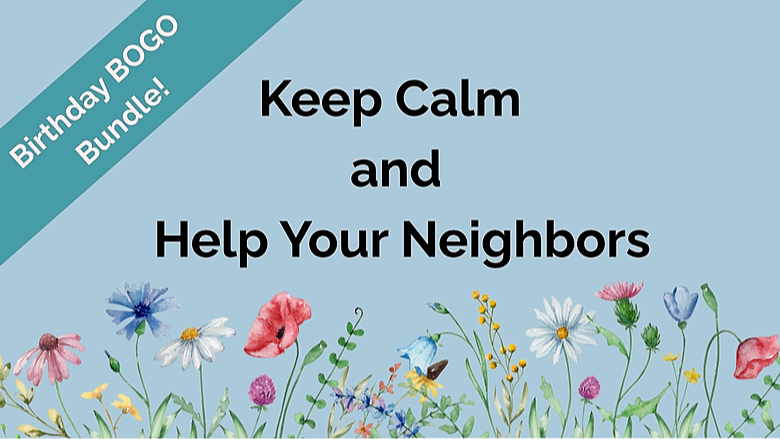
Every year for Katja’s birthday, we choose a course to offer at 50% off – but this year, we couldn’t pick just one course.
So instead, we’re offering a bundle with the herbs and skills to help you stay steady & grounded, and to help you help your community, and it’s more than 50% off!
Click through for all the details!
You might also want to check out our…
- Herbs to Help You Feel Happiness – a living/growing list we’ll work on all year!
- Herbal Activity Calendar
If you have a moment, it would help us a lot if you could subscribe, rate, & review our podcast wherever you listen. This helps others find us more easily. Thank you!!
Our theme music is “Wings” by Nicolai Heidlas.
Episode Transcript
Katja (00:00:14):
Hi, I’m Katja.
Ryn (00:00:15):
And I’m Ryn.
Katja (00:00:16):
And we’re here at Commonwealth Holistic Herbalism in Boston, Massachusetts.
Ryn (00:00:19):
And on the internet everywhere, thanks to the power of the podcast.
Katja (00:00:22):
Woo-Hoo.
Ryn (00:00:25):
Yes. Yes.
Katja (00:00:26):
All right. Well, today I’m really excited. We’re going to talk about two things I’m really passionate about herbs: to help you, and the logic behind why they work and how to pick the one that actually is going to work for you.
Ryn (00:00:41):
Yeah, yeah. Because in this context- and also spoiler alert, all of the others – what works for one person isn’t necessarily going to work for everybody else or anybody else in the same way. Yeah.
Katja (00:00:57):
So, we’re going to use the concept of happiness as our theme as we go through and talk about how to get herbs that are going to work for you. And I feel like that’s really important because times are kind of heavy right now, and people are pretty stressed out. And it’s important to remember that moments of happiness are part of your mental health care. And it is okay to be happy sometimes, even though bad things are happening in the world. And that is what fuels you and allows you to keep going. Okay. Not happiness like it’s my birthday, and I just got a pony. Although today is, in fact, actually my birthday. I did not get a pony. But we’re going to talk about that in a second. But more that happiness of oh my goodness, look at that bird. It’s so beautiful. It warms my heart. I’m just going to sit in that for one moment and remember that there’s beauty and good stuff in the world.
Ryn (00:01:58):
Yeah. It’s worth doing. It’s worth your time.
Katja (00:02:02):
Yeah. It keeps you from going over the edge.
Ryn (00:02:09):
Well, before we continue on let’s just remind everybody here that we’re not doctors. We’re herbalists and holistic health educators.
Katja (00:02:16):
The ideas discussed in this podcast do not constitute medical advice. No state or federal authority licenses herbalists in the United States. So, these discussions are for educational purposes only.
Ryn (00:02:26):
We want to remind you that good health doesn’t mean the same thing for everyone. Good health doesn’t exist as an objective standard. It’s influenced by your individual needs, experiences, and goals. So, keep in mind we’re not attempting to present one, single, dogmatic right way that you must adhere to.
Katja (00:02:42):
Everyone’s body is different. So, the things that we’re talking about may or may not apply directly to you. But we hope that they’ll give you some new information to think about and some ideas to research and experiment with further.
Ryn (00:02:52):
Finding your way to better health is both your right and your own personal responsibility. This doesn’t mean that you’re alone on the journey, and it doesn’t mean that you’re to blame for your current state of health. But it does mean that the final decision, when you’re considering any course of action, whether it’s discussed on the internet or prescribed by a physician, that’s always your choice to make. Yes.
Katja (00:03:10):
Okay. Remember the part about my birthday? So, today’s my birthday. And I’m 52, which is old. And every year on my birthday, we do a sale where I pick one course, and I discount it by however old I am that day. So, this year there is a 52% discount, but I couldn’t pick one course. So, I made you a bundle, and it is the birthday BOGO bundle. Except it’s more than BOGO, because it is the Neurological & Emotional Health course, the Herbal First Aid course, the Herbal Community Care Toolkit, and the Emergency Preparedness course all bundled together. We’re calling it Keep Calm and Help your Neighbors. Because it is all of the skills and the herbal knowledge that you’re going to need to help people keep calm, help manage stress, manage panic, manage anxiety and depression, and help your neighbors with first aid. And the toolkit has 56 of the safest, most accessible, most affordable herbs for you to do work in your community with the 13 most common health problems that you see again and again and again. So, it’s really designed to help you get in your community and start working right away to help people. So, this bundle, if you got all these courses by themselves, it would be $650 because It’s like a kabillion hours of video. And so instead it’s 52% off. Actually, it’s a smidge more than 52% off. Because if it were 52% off, it would’ve been $312. And that seemed dumb. So, I just made it $300 because that seemed – I don’t know – rounder?
Ryn (00:05:01):
Rounder.
Katja (00:05:03):
Rounder. As we age we get rounder.
Ryn (00:05:04):
For the math, yeah. Round math is what we’re up to here.
Katja (00:05:08):
So, you don’t need a coupon or anything. And the sale instead of just being one day, we’ll let it go until Saturday night. So, you can grab it. You can go to online.commonwealthherbs.com, and it’s the very first course in the course catalog right now. And also Ryn has helpfully put this link into the show notes for you so you can get it that way too.
Ryn (00:05:30):
Ta-da.
Katja (00:05:31):
Keep calm and help your neighbors.
Ryn (00:05:33):
Yeah. Help them in lots of ways, including maybe help them to feel a little happiness.
Katja (00:05:39):
A little happiness. Help them to feel calm and steady. Yeah. And that really is what it’s about, right? Like really being able to find that bit of calm, that bit of centeredness that allows you to see people being kind to one another, or a moment of beauty, whether that’s a bird, or a flower, or your grandchild, or whatever. And to hold on to that, and just let it warm you on the inside, and keep you steady through the things that we’re seeing these days that are not beautiful.
Different Ways People Access Happiness
Ryn (00:06:24):
Not warm, not comforting. Not even close. Yeah. So, there’s plenty of that. And we don’t need to elaborate. You know what we’re talking about. But yeah, we have to find ways to access this and to share it.
Katja (00:06:37):
Yeah. When you study herbalism in lots of places, you maybe learn something like oh, well, if you need to be happy, then you need mimosa because mimosa is for happiness. And so you take mimosa.
Ryn (00:06:54):
Mimosa is the herb of happiness. It’s the happiness bark. It’s the… Okay, all right, good.
Katja (00:06:58):
Yeah. If you need to feel happy, just take mimosa. And that’s usually the only thing that people really know about mimosa. But maybe you tried it. And maybe you tried it, and it worked for you. And so you’re like yes, this always works. This is the herb for happiness. But maybe you tried it, and it did not work for you. And you’re like oh, well, no happiness for me because mimosa didn’t work.
Ryn (00:07:24):
Yeah. You gave it to a friend when you had a great experience with it, right? It made you feel lighter and free in your heart. And then you give it to a friend and they’re like I don’t know. I don’t feel any different. And what would you do? Then you would feel discouraged, right? You’d be like oh, I didn’t do it right. I’m not a good herbalist. It was all lies. I should throw my herbs away. I don’t know. People react in different ways. But it would be disappointing for sure. Yeah.
Katja (00:07:49):
But the thing is that like we say all the time, every body is different. And so what helps one person to get to a place where they can find a way to see moments of beauty and to feel moments of calm is not going to be the same thing that helps somebody else. And so it doesn’t actually do you any good to just memorize that this herb is for happiness, and that herb is whatever. Or this herb is for headaches. Whoa, come on. Every headache is different. I have six different types of headaches just in my own head.
Ryn (00:08:28):
Right, right. But also and at the same time this doesn’t mean that the herb that will help someone to find happiness, or the herb that will help someone to get relief from a headache or whatever else it is is totally and completely random. And you literally just have to try every herb in the world one at a time until you hit on the right one that makes you feel happy in your heart. And it will also never apply to anybody else you ever encounter. Thankfully, that’s not the case either.
Katja (00:08:53):
Right.
Ryn (00:08:54):
What a relief.
Katja (00:08:55):
Wow. I feel really happy about that.
Ryn (00:08:58):
Yeah. That would’ve made our jobs a lot harder than they already are. They’re already hard enough. Okay.
Katja (00:09:03):
Yeah. So yeah, that’s exactly it. There is a system. There is a way to think about this. And when we go through it, you’re going to be like oh, that’s actually fairly logical. And when you do that, and you learn to think about the herbs this way. Then you’re going to be like oh, I can actually get the right herb most of the time. Okay. Sometimes you’ve got to kind of experiment with one or two to really nail it down. But most of the time you’ll get it right when you work through it this way. So, okay, let’s work through it this way.
Ryn (00:09:39):
Let’s do it.
Katja (00:09:40):
And we’re going to use happiness as our model here. So, one way to think about this is, or the way that we want to be thinking it is this person wants to be happy, and they’re not happy. This person wants to be grounded and centered and calm, and they’re not there. So, why isn’t this person happy? And when you first ask that, you’re like let me count the reasons. It’s such an absurd question.
Ryn (00:10:10):
Is this Tolstoy or Dostoevsky?
Katja (00:10:13):
It could be either one. Keep going.
Ryn (00:10:14):
No, about the families, right?
Katja (00:10:16):
Oh, that’s Tolstoy. Yeah.
Ryn (00:10:18):
Yeah. So, it’s what? All…
Katja (00:10:20):
All happy families are happy in the same way. All happy families are the same basically. But unhappy families are each unhappy in their own individual ways.
Ryn (00:10:29):
Right. Yeah. So, that’s not entirely true either. But it’s helpful for a situation like this to say okay, you are describing your experience as being unhappy, or you’re describing your experience as it’s hard to find happiness. In what way? How is that true for you, right? What does it feel like? What does it do to your perceptions of the world around you or of the world inside of you? What is the texture there? What is the landscape like? What is the shape of it? Those are the things that we’re going to try and get at.
The Energetics of Tense vs. Lax
Katja (00:11:06):
Yeah. So, there’s two ways for us to do this. The first way is just using the straight basic energetics. Now, if you’ve been listening to the pod for a long time, you know what we’re talking about. And if you are brand new, you’re like energetics, what? That sounds really weird. It’s an old word. It is kind of weird. And it just means what are the actions of the herbs/ what is the state of this person? So, we are going to use six words to describe both what an herb can do and what state a person is in. And those words are hot and cold, damp and dry, tense and lax. And you don’t have to pick just one. We’re going to mix them together. Yeah. It’s like the Reese’s peanut butter cup of…
Ryn (00:11:56):
You can put them together.
Katja (00:11:57):
Exactly. So, okay. Let’s look at our unhappy person, and let’s start with the one that in this situation might be the easiest, right? Are they tense or are they lax? And if you hear lax, maybe you’re like I’m not really sure what that means. But tense, I bet you feel pretty comfortable with what tense means, right?
Ryn (00:12:19):
Yeah. With lax sometimes there’s this thing like well, of course I want to be relaxed. Everybody wants to be relaxed. How could you be too relaxed? Well, if you can’t get yourself together enough to stand up for yourself, that’s a form of excess laxity, right? And it’s not an uncommon one either.
Katja (00:12:35):
Anytime that you are saying to yourself I’ve got toa pull it together, that’s too much lax. Which is not the same as relax. You could be very stressed out and still need to pull it together. So, it’s like laxity in a very uncomfortable kind of way. As opposed to ah, I am relaxed and happy in this moment.
Ryn (00:12:57):
Yeah. It’s like there’s a state of excess tension, of course, where maybe it’s hard for you to feel your feelings, or to label them, or to explain them to anybody else around you, even when they ask kindly, right? And then there’s a state of okay, I’ve relaxed a bit, and it’s enough that I can feel comfortable. And I can explain myself, and talk about what I need, and receive it when it’s offered, and all of that. And then there’s a state of excess laxity where it’s like everything just kind of falls out of me. I can’t keep myself contained. I’m going to burst open at the slightest perturbation. Yeah. That’s excess in that other direction, right? And so you see there’s like a scale. We have a sort of comfortable middle, and then we have two opposing kinds of discomfort.
Katja (00:13:42):
Yeah. I think putting it on that scale like that is a really easy way to see what you’re going to do, right? Because what we want is to bring the far ends towards the middle. And if that middle place is that okay, I am a comfortable amount of together and a comfortable amount of relaxed. Then okay, I can do what I need to do. I can see the beauty in a moment. I can get what I need, I can all those things. But on either end you can’t do that stuff anymore. So, we want to bring those ends towards the middle. Here’s the tricky part though, because you can also overshoot just a little bit. Let me give you an example. Let’s look at a tense person. Okay, so a tense person, right, they are physically tense. They probably have their shoulders up by their ears. Maybe they’re having headaches or migraines, and they’ve got that tenseness in the back of the neck. And emotionally they’re about to snap. Any little thing that you say around them that isn’t right in 10 million different ways, and they’re just going to reply with a hot temper immediately. Like reply with some kind of like waah all at once.
Ryn (00:15:04):
Like a mouse trap.
Katja (00:15:05):
Yes. Like a mouse trap because they’re just ready to snap at any moment. They might be feeling very rigid, like emotionally rigid and also physically rigid. They may not be able to feel flexible about things. So, if you have to change plans, that might freak them out. So, all of this stuff doesn’t sound very great, but it’s all there to try to protect this person. They’re not being a jerk. They have built up this tension in response to what they’re experiencing in the world, and sometimes also what they’re experiencing inside of themselves, right? So, maybe they have a bunch of anxiousness, or a bunch of fear, or a bunch of anger built up, and they might not know it. They might not be conscious of it because it’s like seeping in. And so then when something nice happens or something kind happens, they may not even notice it at all. Because they’re not letting anything in at all because that’s how they’re trying to protect themselves. That part about the protection is important. Because if we look at this tense person, and we just say oh, we’re just going to give them a bucket of kava. We’re just going to chill this person out. We are going to relax them. This is going to be great.
Ryn (00:16:33):
Kava comes to mind because it’s a powerful, relaxant herb, right? And you can feel that in your jaw. If you take some tincture and hold it in your mouth for a little while, you might feel this start to release. You can rub it right into the muscles in your neck when they’re all tense and tight, and you can feel that let go, or into your lower back. And you can also feel a release of some of that emotional tension as well. And kava does that pretty strongly, right? You can take a few droppersful of some tincture, or you could drink yourself a mug of a kava decoction or something, and you’re going to feel it, right? This is an herb that some people work with recreationally when they’re just like I just want to relax. I don’t want to drink alcohol per se. I’m going to take a bunch of kava. Okay, now I’m letting my day go. And for a lot of people, that feels great. That’s the release that they need. That’s the degree of relaxation that they need to introduce into their body to feel good. But…
Katja (00:17:24):
But if that person is in that state of feeling like they have to protect themselves, their threat perception is really dialed up, and we give them that kind of intense relaxation. It may cause them to panic because they’ve built up this rigidity as a form of protection. It makes them feel safer to be rigid. The tension makes them feel safer. And they have learned perhaps over time that if they let their guard down, bad things happen.
Ryn (00:18:02):
That’s a nice key phrase, actually. There’s phrases like that that people will use in the way they describe their emotional state or pattern of response to them. And if somebody says a thing like that, like I can’t let my guard down. Or I’m worried if I let my guard down, then X will happen. That’s like okay, this person has a point in the column of excess tension, right? As we’re talking to somebody, as we’re working with them and observing them, these are the kinds of things that we want to pay attention to to get a sense of what it’s like inside of their body. How their tissue states are fitting together, what their constitution is like.
Katja (00:18:39):
Yeah. So, we also don’t want to leave this person totally tense all the time. That’s also not good for them. We want them to be able to release some of the tension and still feel safe. And so if we’re going to give them herbs, maybe we’re going to choose some nervine herbs that have a little bit of astringency to them. So, I’m thinking here about motherwort. Motherwort relaxes that threat perception kind of response, but it also just has a little bit of astringency, a little pull it togetherness.
Ryn (00:19:21):
There’s also a place here for formulation, right? We don’t always have to solve our problems by finding the perfect herb for this particular situation. We can say all right, well, I’m going to get you some chamomile, and some catnip, but also a bit of rose hip, and a little touch of lady’s mantle. So, chamomile and catnip have nice relaxant effects. They have the pleasant aromatics, and they release those inner tensions. But then the rose and the lady’s mantle are also great nervine herbs. They’re good for stress and anxiety and so on, but they have a touch of astringency. A little bit of that tonifying quality to them so that you don’t collapse into a puddle of water and ooze out of yourself.
Too Much Heat & Emotional Energetics
Katja (00:19:59):
I mean, that’s the other option. If you take a really tense person and give them kava, you could get like panic because oh no, I’ve let my guard down. You can also get bucket of tears because it’s the first time they have relaxed in so long that they have now to cry everything out. And I am definitely, that’s me. I am that person. When I take kava, I almost always cry. Yeah. So okay, so we’re looking at what is really going on on this energetic level. When we describe it in terms of tension. Or okay, we could describe it in terms of heat. Oh, this person is having a lot of agitation, a lot of irritation, a lot of anxiousness, a lot of worry, a lot of fear. And it is just like going in a circle that is just generating more and more heat inside their emotional mind, right? And so for that person, it isn’t necessarily that we need to help them relax, unless they also have tension. You can be a lax person and be generating the fire of anxiousness and worry in your mind, for sure. And so in that case okay, we have too much heat in the brain. Let’s evaporate some of it off. And I’m thinking here about plants like elderflower, ground ivy, catnip.
Ryn (00:21:29):
Lemon balm.
Katja (00:21:30):
Yeah, for sure. Herbs that help you dissipate that heat and have a little affinity also for the emotional mind.
Ryn (00:21:37):
And see this isn’t oh, you’ve got excess heat. Let me find the powerful cooling herbs. Let me find opium poppy. It’s an extremely cold herb, right?
Katja (00:21:50):
I was thinking about watermelon, but okay,
Ryn (00:21:52):
Right. But that herb is so cold that it can numb severe, serious pain, right? If we just look at that action from an energetic perspective, that’s how we would describe it and label it, right? So again, same basic idea as don’t go for your strongest relaxant immediately for the person who’s tense. You don’t have to go for your strongest cold herb immediately when somebody’s running hot. And in some cases it might not even be that the heat is excessive, but that it’s trapped, or that it’s stuck. And what we need to do is help it to circulate, or to move, or to have a release valve, like you were saying. Yeah. So, that kind of nuance can be really critical when we’re trying to find the best fit for the situation.
Katja (00:22:33):
Actually, this is a really good one to kind of hone in on. Let’s just think about that person who has a lot of anxiousness happening in their mind, lots of fear, lots of worry, lots of anxiety, regardless of the rest of the body. The rest of the body might be a lump on the couch. They might be totally shut down because all of their energy right now is in their emotional mind with this fear and anxiousness. And so that’s where the heat is. That’s where the pressure is. And heat pressure, right, like steam. So, then you can think about okay, is this person like a bottle of champagne, and they need the cork to pop out? Or like in old cartoons when a character was mad, their face would get red, and the steam would come out their ears. Do you remember that? Okay, whatever. So, is it that sort of a situation? Those are both a little different. They’re not exactly the same situation, but they’re similar. Or is this like a super analytical engine happening in the mind? So, like the amygdala, the threat center in your mind is swimming around in these different kinds of threat perceptions, and your prefrontal cortex cannot get a hold of it. Your logical mind can’t stop the spinning. I just imagine this like a little.
Ryn (00:24:05):
A little dynamo.
Katja (00:24:08):
Yeah. A dynamo, exactly. Like it’s just generating electricity. Except it’s not even, it’s just generating heat and anxious thought. Okay, maybe we could call that… Man, if we could find a way to create a power source out of anxious thought, we’d be great. It would be great.
Ryn (00:24:26):
Oh, man.
Katja (00:24:27):
It would be unfortunately renewable energy. Okay. So, that’s a more analytical look at it, and there’s a little less pressure there. There’s a lot of speed. And there’s like a little bit of a temperature difference too. That one where it’s like the cork that has to pop off the bottle or the steam coming out your ears, there’s a lot more heat there. And so those two are the ones where I’m really thinking of like elderflower. Elderflower is like when you’re that bottle of champagne, and you’ve got to just let it out. But this other a little bit more analytical, like I can’t let… Like one part of my brain can see that the other part of my brain is freaking out but cannot stop it, can’t get ahold of it. That’s where I’m thinking about mugwort. And the funny thing here is that elderflower is much more about the diaphoresis, the release of pressure and heat from the body. Also physiologically if you have a fever. Whereas mugwort is more about coolant like in a machine. Like you need to cool the gears down because they’re moving too fast. Yeah.
Ryn (00:25:47):
Yeah. And there’s something about the bitter element that you get with the mugwort that contributes to that quality. It’s sometimes surprising for people who are first starting to get into herbs that not all of the nervines that help you to feel calm, and relaxed, and less anxious are flowery, and sweet, and stuff like that. But many of them are bitter, and some of them are profoundly bitter. But that’s a great way to bring you back into your body, bring you back into this moment. Getting a good, strong, bitter flavor on your tongue is something you can’t really ignore. It puts you into your senses. Like if you think about those sort of like exercises or practices to help somebody who’s in the midst of a panic attack or is really stressed out, right? And it’s like name five things you can see, and four things you can hear, and three things that are touching you, right? It’s that same idea. You have the strong bitter on your tongue. And of course there’s other stuff going on. There’s chemical activity, and there’s influence on nerve firing rates, and we can go on and on for hours and hours, right? But just to say this is an important element of it that I don’t want to ignore.
Katja (00:26:51):
Yeah. Okay. So, does that help you when we say about why is this person unhappy? Okay, well, why are they unhappy is already insufficiently specific, right? We have to get more specific. And then we’re thinking about what is going on for this person? And we think about it in terms of that energetic aspect. Are they too tense? Are they too lax? Are they too hot, too cold, too damp, too dry? Damp would be like bogged down stagnation. Whereas dryness would be totally airy, and they can’t focus. Okay. So, thinking about those states. And we think about them also with the narrative of it’s not just like ah, I see tension in this person. No, we’re looking at the tension and also thinking about the story that goes along with it, like this person’s individual’s story of that tension.
Ryn (00:27:54):
Yeah. I just want to put a little note in here that this exploration of energetics as they manifest in the emotions, and as they manifest in the nervous system is something that we go into a lot of detail in the Neurological & Emotional Health course. And we found that that’s often very, very helpful for students who have been learning energetics in terms of strictly or primarily physiological health problems, right? Like oh, a fever means too much heat. Or when there’s deficient blood circulation, then that’s a cold pattern over there. And that’s all true. That’s fantastic. That’s critically important.
Katja (00:28:30):
It’s a little easier to see because it’s in the body as opposed to in the emotional body.
Ryn (00:28:38):
In the emotions, in the behavior, in the reactions. And those things can feel a little harder to nail down for students who are new to this kind of concept. So, if this is catching your attention, and you want hours of it, then yeah, the Neurological & Emotional Health course contains that in detail. And that’s part of the birthday BOGO bundle.
Accessing Happiness: Slow Down with Skullcap
Katja (00:28:58):
Yes. Keep Calm and Help Your Neighbors. Yes. All right. So, let’s now look at a list of herbs that I really think are super helpful in terms of working with happiness. And this is a list that I’ve been building because for 2026 I was like what could be the herb of the year? And I was trying to think of one herb, and I was like no, I can’t do it. Happiness is going to be the herb of the year. And what I mean by that is just a whole bucket of herbs that can help people to get to a place where they feel calm enough, and grounded enough, and centered enough that they can acknowledge moments of happiness, and kindness, and beauty, and joy so that they can stay steady, keep going, not go off the edge of the cliff.
Ryn (00:29:59):
So, making happiness accessible to somebody, and I just mean literally in the sense of they’re now able to access it, is our goal here. And that’s different from take this herb, and you will become happy. Like the mimosa story that people are presented with a lot of the time. Yeah.
Katja (00:30:16):
Right. And then it’s just, yeah, mimosa never actually did that for me. And it was like what? I just don’t get happy, I guess.
Ryn (00:30:24):
No happiness for you. Sorry.
Katja (00:30:28):
So yeah, so we’ve got this list of herbs – and it is currently February 5th – in the herbal activity calendar, which anyone can access. Ryn will put a link to it in the show notes. But every Wednesday I have a new herb to add to this list, and I’ve been adding it to a corresponding blog post as well. So, I expect that this list will probably grow to be at least 52 herbs. But for now we have a big handful. And I think that it will probably help you to get started in thinking about how to approach helping yourself and helping other people to build this kind of calm. And so I want to start with skullcap. Which our little bumper sticker for skullcap is when your mind is spinning around like a hamster wheel. And so energetically when we think about skullcap, it is cooling and it is relaxing. Especially it has a cooling and relaxing effect at the base of the neck. And you know, that’s also where threat perception is, right? Skullcap is often helpful for people with headaches, especially like tension migraines.
Ryn (00:31:51):
Yeah, definitely.
Katja (00:31:53):
But also that’s right where all that threat perception work is also happening, right?
Ryn (00:31:58):
Yeah. Skullcap can sometimes help with that jaw tension too. And just think about gritting your teeth to get through the moment, and get through your day, and get through the customer interactions or whatever it is for you, right? Yeah, that can take a toll, so we want to let that go too. But it has a reflection in your emotional state at the same time always.
Katja (00:32:19):
Right. I feel like when you’re feeling out of control, when you feel like you don’t have any options. There’s no way for you to do something better, get something better, be in a better place. That’s often a time when at night people clench their jaw. They feel trapped in a situation. They feel like too much is built up in a situation, and they can’t get free of it. So, that is often a place where skullcap can be really helpful.
Ryn (00:33:03):
And the spinning hamster wheel metaphor also has an element of repetition in it. Like you’re expending a lot of energy, you’re not going anywhere. And you’re faced with the same view the whole time, right?
Katja (00:33:17):
Yeah. So, that looks like in your mind if you are replaying bad things that happen to you over and over and over again in your mind. Which by the way, you’re not doing that on purpose. Like that’s not a choice. Nobody would choose that. That is your mind moving faster than you can get a hold of. And skullcap is really good at slowing that down and even stopping it. Okay. And then you’re going to take control. You’re going to take over from there. You’re going to say okay, now I can do my breathing and calm myself down the rest of the way. Or now I can do my meditation. Or now I can read this thing that is encouraging and uplifting to me or whatever. But you couldn’t do any of those things until you got the brain to stop spinning. So, even if you feel like okay, well my brain stopped spinning. But that’s not enough because it wants to start spinning again. Okay, that’s all right. They can be a two-part solution where we have the we’re going to stop the hamster wheel, and then we have someplace else to go. We can get off of it and go someplace else that will help solidify that calmness. Yeah.
The Bitter of Blue Vervain & Catnip Chill
Ryn (00:34:33):
Nice. Skullcap, a good friend. All right. So, next up we’re going to talk about blue vervain. And this is one of those herbs that’s profoundly bitter. We often recommend people to take this as a tincture if they’re cool with taking a milliliter of alcohol at a time. It’s a tiny amount, but sometimes people have reasons why they can’t take any alcohol. There are other options in that circumstance.
Katja (00:34:58):
I mean, you can put it in tea. It just is very bitter, so don’t try to drink all of it at once.
Ryn (00:35:05):
Yeah. If you’re an herb student, and you’re like I’m going to learn my herbs really good. Okay, do it. A hundred percent do it. Make a strong blue vervain tea and try to drink a whole quart today. See how that goes for you.
Katja (00:35:15):
It probably won’t be fun.
Ryn (00:35:17):
But in a lot of circumstances we can be like all right, I’m going to make a tea blend. It’s going to have some tasty herbs in there, some chamomile, some catnip. Oh yeah. And then some blue vervain is going to get in there, not too much. But again, the bitterness is part of its activity, bringing you into the moment, getting you into your body. And this herb – like motherwort that we’ll come to in a minute – is a bitter with a strong relaxant activity to it. Very good. And with vervain, our image for this one, our little bumper sticker slogan thing is this is helpful when you’re holding on really tight. A lot of herbalists will say about blue vervain that this is for the type A personality, right? Which is like the person who needs to run everything and can’t trust or delegate somebody else to go and do it because they’re not going to do it right. And that’s a fairly helpful descriptor, but I think it’s a little too limiting for blue vervain. There are other manifestations of tension and holding on that don’t look like that I’m in charge, and I control everything sort of vision.
Katja (00:36:22):
Yeah. You can be holding on too tight to all sorts of things but not be an overachiever or whatever. And I think when we say type A, we do kind of associate that.
Ryn (00:36:34):
It’s implied, right?
Katja (00:36:35):
Yeah, it’s tied to productivity. And again, when somebody feels the need to control things, it’s not because they’re a jerk. It’s because that’s what helps them feel safe. It’s because in their life experience that role was put upon them because maybe their growing-up situation was not safe for them. And so they had to do everything they could to keep it under control or maybe a million things, right? But whatever, what they have learned in their life is they need to control things to protect their own safety, and no one else around them is going to do that for them. Right. And so when you feel that way, even when you’re in a safe place, it is very hard to let go of control because you have tied control and safety together. And so obviously we don’t want to be in an unsafe place and take a bunch of blue vervain. Because okay, that wouldn’t be great. But in a safe place, like in your own home before you go to bed, or wherever is a place that is safe for you.
Ryn (00:37:54):
Turn off the tv.
Katja (00:37:56):
Yeah. Put down the phone, put on some nice music, and take the blue vervain and allow yourself a break. Allow a break. Yes, you’ve learned that being in control is how you say safe. And I don’t want to tell you that that’s not true or not valid, because it probably is. But you also need a break from it. And if you can get yourself in a place where no one is around you, and you do know that you are safer for a period of time. Then allowing yourself to come out of that place and just take a break from it is really healthy. And over time you may find that you can do that more often than you thought you could. Over time you may find that there are more safe places that you have access to than you thought you did. Because control equating safety does also become a habit. And so it might be that you don’t need to be in control as often as you think you do. But it’s hard to evaluate that when you’re in that state. And honestly, it’s not really safe to evaluate that when you’re in that state, because this is how you have learned to keep yourself safe.
Ryn (00:39:12):
Yeah. People who have a meditation practice may be finding some resonance here, right? There are benefits to the act of meditation in and of itself, yeah. But a significant part of the benefit comes from being able to carry what you experience on your meditation cushion into the rest of your life and ideally someday into the stressful situations as well, right? And here’s a little plug for combining your herbs with your meditation practice. They can help you to deepen it. They can also help that feeling to stick, and to linger with you, and to be easier to carry into the rest of your life.
Katja (00:39:50):
Yeah. All right. Well, let’s talk about catnip.
Ryn (00:39:56):
We have to talk about catnip. Talk about an herb of happiness, right? I mean, you’ve seen a cat eat some catnip and get blissed out. Maybe they kind of run around with excitation first. But then they lay back, and they stretch the whole belly up, and they purr everywhere for a while. Yeah, that’s the feeling catnip can bring you.
Katja (00:40:13):
Yeah. And it’s funny actually because… So, our little bumper sticker for catnip is when anxiety is rising up out of your guts with or without nausea, right? So, it can be that butterfly feeling, or it can be all the way to nausea feeling. But either way it’s rooted in feelings of anxiousness. And I think the cat example is really appropriate and also a really good way to see the energetics here. Cats take some catnip, and they run around like crazy little beasts for however many minutes. And that’s releasing that anxiety, releasing the tension that came with it, getting it out of their system. And then they can lay there and be happy cats. And that’s such a physical representation of what we’re trying to talk about. You can’t just say oh, give me the herb to stuff that anxiety back down again so that I can feel happy for this moment. No, no, no. We’ve got to let it out. Get rid of it. And then you can okay, now I can chill out a little. Yeah.
Ryn (00:41:26):
Yeah. That’s catnip, for sure. All right. We can leave that there, I think.
Katja (00:41:31):
Yeah, that was a really obvious one.
Motherwort Protection & a Hug of Linden
Ryn (00:41:33):
We can meditate on that for minute, but I think that covers it. Yeah. So, motherwort then, right? Like I mentioned previously, a bitter herb almost on the level with vervain, maybe not quite as much.
Katja (00:41:44):
Yeah, I think it’s maybe only 75% as bitter, 60% as bitter. I mean, vervain is really bitter. Yeah.
Ryn (00:41:51):
Yeah. But motherwort, if you’re not driving or anything, then look up pictures of motherwort flowers and just stare at them for a while. And that’ll be good herbal medicine for you today. Because they’re like little purple and white and pink fuzzy firework things that grow on this very erect, very square plant. And they’re like these little bursts of like…
Katja (00:42:17):
Softness, yeah.
Ryn (00:42:19):
Yeah, that’s the word.
Katja (00:42:20):
Tuftiness, yeah.
Ryn (00:42:22):
Yeah. So, motherwort is a very interesting plant with those, it’s not contradictions really, but those things layered together on each other. And the plant is really square. Like if you touch the stem and roll it between your fingers, it’ll be like this has square sides. I can feel it like.
Katja (00:42:36):
Like sharp corner, square sides. You know, you hear that thing like oh, everything in nature is round and whatever. But no, absolutely not. Motherwort is so square, you could do geometry with it. It is like 90-degree angles.
Ryn (00:42:51):
Yeah. And the leaves grow right and left. You go up to the next node, they grow front and back. Like a totally 90-degree turn each time. And then the seed pods on the motherwort are really sharp and spiky. Motherwort is protecting the seeds. You’re not going to just come in and grab at it. Watch out. And that’s a particular element of the plant that we absorb as a metaphor or an image to hold in mind when we want to understand what the plant does. Our bumper sticker for motherwort is that this is for when you need help holding healthy boundaries. Which is neither complete lockdown, nor is it everything flows into me and out of me freely. That wouldn’t be safe in a lot of places, would it?
Katja (00:43:38):
Right. So, we’re really looking at here motherwort’s ability to relax, specifically threat response. So, when you feel that adrenaline rising, and you feel your heart start to race. And you feel that flush of heat, like the cold sweat or whatever it feels like for you. And you feel kind of like your stomach fall out from under you. All those feelings in that first moment of oh no, I’m in trouble. Oh no, this is bad. Those are kicked off physiologically by adrenaline and other things going on in your body in response to awareness of a threat. And motherwort physiologically relaxes that response. And so if you think about well, how can an herb help me keep boundaries? All right. Well, if you were not feeling nervous nausea. If you were not feeling racing heart and being on the verge of a panic attack. Could you handle this person being rude to you, or disrespecting you, or asking you to work late yet again better? Ah, of course you could. If you were feeling calm and centered, and the person asked you to work late again for the fifth time this week. It would be so much easier for you to say yeah, I’m not going to do that tonight. I did it five times this week, and tonight I have plans. I’m sorry. You’ll have to ask Joe if he can do it. But when you are feeling the panic, and the threat, and the fear, and all of that rising in your body physiologically, it is really hard to have good boundaries. So, it’s important to recognize that when we say it helps you hold healthy boundaries, this is not woo woo whatever. It’s very physiological stuff. And it is really a matter of well, what prevents me from holding healthy boundaries? Oh, fear. Almost always it’s fear. What will happen to me if I say no right now? What will happen to me if I stand my ground right now? Those are fear responses. Okay. So, I think that’s…
Ryn (00:46:00):
That’s motherwort.
Katja (00:46:01):
That’s motherwort, yeah.
Ryn (00:46:04):
All right. So, we’ve had kind of a run of relaxants here. And we’ve got one more, and then we’re going to take a turn. But first we have to talk about linden. Because linden is our hug in a mug herb. Linden is like these others we’ve talked about in that it’s relaxant, but linden also adds a moistening quality that we haven’t found in skullcap, or catnip, or motherwort, or vervain. And that can be particularly helpful when somebody has dryness as a dominant pattern, again in their constitution, but also a form of emotional dryness. Which can manifest with brittle feelings, right? Dryness is brittleness. It can show up often with distance. Like dryness and emotional distance often travel together.
Katja (00:46:52):
Yeah. Or like…
Ryn (00:46:56):
You know, when you’re feeling distant. When you’re feeling like I need to kind of keep my distance away from things. That’s not when you’re going to go in for a hug, is it?
Katja (00:47:05):
Right? Almost like if you have a sponge, and the sponge is all dried up. Then you try to wipe something on the counter. And maybe one little area soaks it up, but you’re just kind of rubbing a dry thing across the counter. But if you take the sponge and get it damp first, and squeeze it out, and then wipe the counter. Okay, if you don’t clean the counters in your house, then this example is not going to be working for you. But it’s true. Whenever I want to clean the counter, I grab the sponge. I get it under the water. I squeeze it out, and then I clean the counter. When you’re totally dry, you’re not actually receptive to things. It’s very hard to be receptive to things.
Ryn (00:47:55):
That’s why we get flash floods in the desert, right? If the ground could absorb that water and pull it in, then you wouldn’t have it all rushing into the canyons and washing things away. Yeah. It’s an interesting relationship between an existing state of dryness and a reaction when something moist comes around. And so again, translate all of that into emotional patterns, into feelings, into relationships, and you’re getting at what we’re talking about here.
Katja (00:48:22):
So yeah. So, bringing in the linden is like putting the sponge under the water. It is softening the heart, softening the emotional body to be able to build that awareness of nice things happening around you. And build that accessibility to get to calmness, and even community, and even relationship that you maybe didn’t have because you were feeling dried out and closed off.
Ryn (00:48:57):
When we would see clients in person, like in a physical office room together, we would always…
Katja (00:49:04):
Ah, in the pre-COVID day.
Ryn (00:49:06):
Back in the day. We would prepare linden tea before they would arrive for several reasons. A big one is that it basically doesn’t have drug interactions to worry about. So, whatever they walk in with and say oh yeah, I’m on this six meds. It’s still going to be fine for them to drink a cup of linden tea. No problem.
Katja (00:49:21):
Yeah. And like nobody’s allergic to it. Yeah.
Ryn (00:49:23):
Yeah, right. But then this other thing. This can we maybe soften the shell a little bit? Can we relax and open the heart a little bit? That’s very good when we’re about to ask a bunch of personal questions and try to figure out a good solution for you.
Yarrow Armor & Sage the Savior
Katja (00:49:38):
Yeah. All right. Well, we talked about some astringents. So, here we have some astringent lined up, and the first one is yarrow. And our little bumper sticker for yarrow is when you need to pull yourself together and put on your armor. So, if you feel like you have really thin skin. Or if you feel like you just can’t handle one more thing. Like you just cannot. One more thing and you will fall apart, right? You’re like right on the edge of falling apart. Or you already fell apart, also an option. Yarrow is really helpful for pulling together and emotionally pulling together. Physiologically it helps with controlling blood. So, it’s styptic. If you are bleeding, it can help stop the bleeding. And also if there’s bruising or whatever else, it can help that be funneled away into all the different places that it belongs.
Ryn (00:50:46):
Yeah, yarrow’s a complex herb really. It’s got bitter actions. It’s got effects on your liver and your digestive process. It has some effects on urinary function, including eliminating excess fluids. So, when there’s too much of a swamp hanging out in the body, and we want to stir up the fluids, and drain away the excess, and keep things where they belong, then yarrow is really, really handy. And so when you feel that way emotionally…
Katja (00:51:10):
Yes. That’s really what I was getting at, that swampiness, right? Whether that’s a bruise, or whether that’s emotionally, or whether that is some edema sort of situation. You can’t hold it together if you are a swamp. That’s like the definition of a swamp is it sort of encroaches. Everything just sort of leaks out of it in all these different directions. Whereas if you think about a reservoir, it has boundaries. Or even a natural pond or a natural lake, they typically have boundaries, like an edge, you know?
Ryn (00:51:49):
Now, none of this is swamp slander. We love our beautiful swamps, and bogs, and fens, and all of them. They’re important parts of our ecosystem, and we should probably have more of them, honestly. Bring back the beavers. Okay, we’re all on board.
Katja (00:51:59):
Right. But emotionally that’s not always a position from whence you can navigate the world comfortably, right? And so a little bit of pulling things together, giving yourself more of a boundary instead of seeping out everywhere can make you so much more comfortable. It’s not really comfortable to be seeping out everywhere. You feel like yourself is not together.
Ryn (00:52:35):
Especially if you’re in a crowd of people on the subway. There are times when that might be right and feel good, but this isn’t one of them, you know?
Katja (00:52:41):
Yeah. Like a really good dance party where you know everybody in the party. Sure. Go, you know, you can…
Ryn (00:52:49):
Cut loose.
Katja (00:52:50):
Yeah. Not be pulled together, that’s totally great. But yeah, when you need to feel like I know where my boundaries are. I know where my edges are. I have some thickening around me to keep me safe. That’s yarrow. Yeah.
Ryn (00:53:09):
All right. So, another emotional astringent or emotional tonifying herb here is sage, garden sage, culinary sage, whatever.
Katja (00:53:20):
Yeah, like super normal, regular, old sage.
Ryn (00:53:23):
Yes.
Katja (00:53:24):
Not the fancy version.
Ryn (00:53:25):
But also sage the savior, you know, Salvia salvatrix. These are some ancient names for the plant and ways people would think about it. It’s a famous herb for good reason, right? Sage has, again, a lot of different qualities to it. It’s a complex plant. It’s got aromatics, it’s got bitter notes, it’s got astringent tannins. It does many things. But for our interest here today, we could say that this is an herb that’s really helpful when overwhelm is making you feel like you’re in free fall, right? Like the ground has shifted underneath you and you’re falling. You can’t see where the bottom is.
Katja (00:53:59):
If falling isn’t good metaphor for you, then overwhelm makes you feel like you are buried under all of the stuff, right? Like you’re holding up the weight of the world like Atlas, except it is your inbox. It’s your to-do list. And so it’s not one nice world. It is like 60,000 things that are balanced on top of each other. And if you turn the wrong way, they’re all going to fall off. Yeah. Maybe you don’t feel like you’re in free fall, but the stuff is about to be if you don’t hold it just right. Yeah.
Ryn (00:54:38):
That’s a nice refinement. I like that.
Katja (00:54:40):
Sage is also, I find, really helpful when there is a component of anger. So, if you feel overwhelmed, and you’re mad about it. And the reason may be because you feel like everyone has piled stuff on you. And nobody is willing to help you with all the stuff that they have piled on you, and you kind of resent that. Well, you know what? You’re right. But that doesn’t help you get through your day. And so it is important to be able to set that aside and just get to a place where you can function. Because It makes you a little crazy, right? It makes your head spin all around. Wasn’t there a movie where the person’s head was spinning? It’s in a famous movie that I’m supposed to know about as a child of the 80s.
Ryn (00:55:39):
Are we talking about The Exorcist?
Katja (00:55:41):
Yes. That’s the one.
Ryn (00:55:45):
Okay. Yep, that’s right. Katja does not watch horror movies. So, I’m very surprised that this came to mind for her.
Katja (00:55:51):
Well, I just know that there’s a scene where somebody’s head spins around like that. And I think about that when I need sage because sometimes I feel like my head is spinning around like that. And honestly, maybe I feel a little like I need to be exorcised.
Ryn (00:56:07):
A little bit of an exorcism.
Katja (00:56:08):
Yeah, I need a little exorcism.
Ryn (00:56:10):
Maybe we recruit St. John’s wort to help out alongside the sage. That could be pretty good.
Katja (00:56:15):
Yeah. So, anyway, when you are feeling that way, sage has that astringency. It has that pull it togetherness. It has a flavor that really makes you attentive to it. It’s not exactly bitter. It’s pungent and aromatic.
Ryn (00:56:40):
If you steep it strong and long, especially if you let it get cold, then the bitter comes through for sure. But when it’s good and hot and relatively fresh steeped, then the aromatics dominate.
Katja (00:56:49):
Either way it’s very embodying. It’s like out of your head because that’s what’s going on, right? It’s your head that’s spinning around. It’s not your hands. It’s not your knees. It’s your head that’s spinning around. And so you’ve got to get out of that, and sage really does that. And the other thing, there’s a real tie with digestive health. Sage is very helpful when you’re trying to digest things that are heavy, like a really heavy meal with a lot of fat in it. That’s why sage is in sausage and why it’s so common in Thanksgiving meals and stuff like that, like heavy meals. And I feel like that component is important here. Because when we think about digestion, we’re not really just talking about food. You have to digest your emotions too. You have to digest all of the things that come into you as stimulus, as input, as items on your to-do list that you might not want on your to-do list. And all of that has to be dealt with. It has to be digested. And so I really feel that tie very strongly. And of course, it’s not metaphorical. The digestive system is part of your emotional system. That’s where the brain in your guts is. The tie between your emotional health and your digestive state is very strong. So, I don’t think that it should be overlooked in this case.
The Sweet Safety of Rose
Ryn (00:58:32):
All right. Our last herb for today – not the last of all the possible herbs for happiness in the entire gigantic world that we live on, okay, but for right now – is going to be rose. Yeah, rose. So, we did mention this earlier, right? Rose having that capacity to add in a nice little degree of emotional tonification, a little emotional astringency, a little pull yourself togetherness. But of course it’s coming with rose and the smell of rose. And that – I don’t know – how do you even describe it?
Katja (00:59:06):
I mean, it’s exhilarant. That is how we describe it. Yeah.
Ryn (00:59:11):
Yeah. It has that mood-lifting element to it. And when you put a bit of rose in your tea, it’s just the same reason that you would hand roses to somebody. That you want them to feel good, right? Yeah.
Katja (00:59:25):
Our bumper sticker for rose is like when your stress feels like a predator. And you might be thinking like wait, hold on. Roses are for Valentine’s Day. What are you talking about? All right. So, if you have ever seen wild roses in the woods somewhere. Well, even at somebody’s house if they don’t tend their roses, they will grow this way too. But really wild roses, they grow in the shape of an umbrella. They’re vines, and they grow up, and then they arch over back down, and they do come all the way to the ground. And they do that in all the different directions so that they kind of look like a sea urchin or something. And every one of those vines is thorny. So okay. So, now we have this thorny umbrella with beautiful roses on it. And if you are in the woods and you see such a thicket, and you look, there’s little trails underneath it. Because all the little bunnies, and the squirrels, and the chipmunks hide in the rose bushes so that the hawks and the foxes can’t get to them because thorns, right? And so it’s a safe place for them to just hang out and take a break, before they go back out into the world in search of food or whatever it is they’ve got to go get. If you feel like you know what I need? I need to be walking around with an umbrella made of rose thorns all around me and also beautiful roses that I can smell. And then I would feel a lot better because stuff would stay away from me. Like okay, that’s sort of a silly example, but also it’s entirely true. And so if that’s what you feel like you need, rose is going to give that to you. It does that already for bunnies and chipmunks, and it will do it for you too. And my favorite way to do that is to put rose petals in honey and let them extract. You’ve got to put fresh rose petals in the honey. And let it extract until it sucks all the fluid out of those petals and sort of becomes like a syrup. Woo. It is so good. Yeah.
Ryn (01:01:39):
You’ll get disappointed if you take dry rose petals and cover them with honey. Because they’ll pretty much just sit there and not much exchange will happen. So, it is the fresh ones you want to get. And be careful. I wouldn’t advise going to the grocery store flower shop area and working with the roses from there. Maybe if they’re organic, that’d be okay. And sometimes you’ll find those. But roses are one of those crops like conventional coffee for instance, where they’re really heavily treated from every stage of growth until harvest and afterwards too. So, those aren’t the ones we want to do this with. But yeah, if you can find a wild rose bush, or if you’ve got one growing. You can care for it and get those fresh petals. You don’t have to gather them all on the same day either, right? You can get a whole handful today and put them in there with a little honey. Get another handful tomorrow, a little more honey on top. And keep it going until you have your little container filled up. That’s good stuff.
Katja (01:02:32):
Yeah. Okay. You can also just buy a rose elixir. There’s nothing wrong with that. You can totally do that. If you do that, it’ll probably be made with glycerin instead of honey. And I think it makes a nicer extract in honey, but it’s okay. We will take what we can get because it is such a delightful way to get the rose into you. And just like we were talking about the bitterness of some of these herbs as helping you get into your body. Sometimes, especially when stress feels like a predator, that moment of sweetness actually gives you feelings of safety. And of course that comes from primal whatever, when you were an infant and well, milk is sweet. Or baby formula if that’s what you had, whatever, they’re sweet. And so those original primal feelings that associate sweetness and comfort, sweetness and safety together can be really helpful. And of course, that also can cause people to have emotional eating patterns. And hey, you know what? Those are logical, and they’re nothing to be ashamed of. They’re just like part of how we’re programmed to seek out that comfort in sweetness, comfort in food, because it is totally primal. It is wired into our DNA. But that is why I really love rose. If you put rose in tea, like dried rose petals in tea, it will be bitter. But if you put it in a glycerite, or if you put it in honey, then it’ll give you that sweetness. And sometimes that sweetness is actually the thing that you need to check into those feelings of safety. Yeah.
Ryn (01:04:29):
Yeah. All right. So, like we’ve been saying, there’s many more herbs that can help people define happiness depending on their baseline state, their constitution, their flavor preferences. Lots of different reasons come into play here, right? But hopefully what we’ve been saying today helps you to get a sense of how to differentiate what kind of questions to ask, what kind of things to consider for yourself or someone you’re trying to help, so that you can make a more educated, not even a guess but a more educated first try. And that’s the way we do it. That’s the way we do it in terms of happiness. That’s the way we do it in terms of anxiety, and depression, and fear, and worry, and gut upset, and achy joints, and the whole kit and caboodle, right?
Katja (01:05:13):
Really, it is literally exactly this process applied to anything that’s going wrong in your body, because there is not one herb for whatever the problem is. There is how are you having this problem right now? Which might be different than another person who is having the same named problem. And what do you need to change about what’s going on for you right now so that you will be more comfortable? So that you will manage the situation better physiologically, emotionally, whatever.
Ryn (01:05:46):
Yeah. All right. That’s going to be our episode for today. One more reminder that for a limited time only, you can get the birthday BOGO bundle. You can Keep Calm and Help Your Neighbors. And that includes the Neurological & Emotional Health course with the deep dive into emotional energetics. It’s got the Herbal First Aid course with all of the hands-on stuff you need to do to care for bleeding wounds but also anxiety attacks. Because I’ll tell you, when we’ve done first aid work, it’s been way more about emotional first aid than physical.
Katja (01:06:18):
So, yeah. Broken bones, burns, wounds, and also mental health. Yeah, all of the everything.
Ryn (01:06:26):
We’ve got the Herbal Community Care Toolkit in there addressing really common problems that people have with very safe and accessible, inexpensive, widely available herbs to work on them and help to build up community resilience. And we also have the Emergency Preparedness course to give you some insight into what to do when we’re expecting a hurricane, a flood, a fire, ice, anything like that.
Katja (01:06:52):
So, you know, we call it the birthday BOGO bundle, but it’s actually buy one, get a bunch of them free. Because ultimately it ends up being less than the cost of just the Neurological & Emotional Health course when you bundle it all together and put on the 52% discount plus a little bit extra. Yeah.
Ryn (01:07:11):
And like all of our offerings, these courses come as primarily video lessons. They come with twice weekly live Q&A sessions with us. You get lifetime access to all of the material. It doesn’t disappear after six weeks or anything weird like that.
Katja (01:07:30):
In fact when we update, you get the updates for free. So, you get the course now. But in the future you will still be getting new stuff because we like to update our courses. We learn new things, we see new things. Students ask questions, and we say oh, that should be in there. And then we go and we put more stuff in there.
Ryn (01:07:47):
Yeah. It happened yesterday.
Katja (01:07:49):
It’s probably going to happen today too.
Ryn (01:07:53):
Every lesson in those courses has a discussion thread. You can just pop that open and say hey, I’ve got a question about what you said in here. We’ll get back to you within a day. There’s an active student community to share your successes, and your favorite recipes, and the really cool rosebush you found in the woods when you took a hike today. All kinds of fun stuff like that, and a bunch more on top as well. So, it’s fantastic, and you should really check it out. You can find all of these things at online.commonwealthherbs.com. And if you go there, and you’re looking for the bundle, it’ll be the first thing in the list of available options. Check it out.
Katja (01:08:26):
And if it is no longer my birthday, the sale will run until the end of the day Saturday. But if it isn’t that anymore by the time that you hear this, don’t worry. You can still get these courses. Just the birthday sale won’t be there anymore.
Ryn (01:08:43):
All right.
Katja (01:08:45):
So, do it now.
Ryn (01:08:48):
All right, everybody. That’s it for now. We’ll be back with some more Holistic Herbalism podcast soon. Until then, take care of yourselves. Take care of each other. Drink some tea.
Katja (01:08:58):
Drink some tea.
Ryn (01:09:00):
And find some happiness.
Katja (01:09:02):
It’s important. It’s going to keep you sane.
Ryn (01:09:05):
We want that for you. Good luck out there, everybody.
Katja (01:09:07):
Bye-bye.
Join our newsletter for more herby goodness!
Get our newsletter delivered right to your inbox. You'll be first to hear about free mini-courses, podcast episodes, and other goodies about holistic herbalism.