
Podcast 288: Is Perimenopause Making You Tired?
I don’t know about you, but my social media feed is filled with stuff that is supposed to “give me more energy” to get through perimenopause. What does that even mean? 🤔
Perimenopause isn’t causing fatigue for no reason. Your body is doing things: some are new, and some are a sort of inverse callback to your teenage years. Yeah, that’s right – menopause is like a second puberty. Fun! 🫤
This is work. It’s like remodeling your house while you live inside it. There’s a lot to change, a lot to update, some things to take offline, and all of it happens while you’re in the midst of your daily needs for function, repair, healing, and growth. Those never truly stop, but the demands of the remodel can make them all slow down, or get more difficult.
In this episode, Katja shares herbs who will do some of the work for you. By reducing inflammation in the blood vessels and in the digestive tract, and by keeping your lymphatic system flowing smoothly, you can free up a lot of resources inside the body so that your internal workload is lower. In a sense they serve to enhance your inner clean-up crews and help them function more efficiently. (It would be nice if they would also clean your actual house, but alas.)
It doesn’t take stimulants or adaptogens to do this job. We don’t always need to solve feeling tired by going to the buzzy herbs.
So if you’re feeling tied, but you don’t even have time to take a nap, at least these herbs can do some of your work for you!
Here are the links Katja talked about in this video:
- The Reproductive Health course, which includes not just peri/menopause, but also everything else – endometriosis, PCOS/PMOS, managing your cycle, and more. Also prostate health and andropause: reproductive health for everyone!
- Our full course catalog – everything we offer. (Yep, there’s a lot.)
- Our favorite gluten free/dairy free cinnamon buns. These are SO GOOD. 😋
- Our gluten free / dairy free substitutes list. Tons of options so you don’t have to feel deprived as you change up your diet!
Everything’s on sale in July…
Oops, July 2026 is over, but this sale is semi-annual: every July and December we have a 20% off sale so that students who need a discount for any reason can depend on 20% off twice a year with no means testing – you don’t have to qualify or have a reason, you just get 20% off, every July and every December.
All our offerings are self-paced online video courses. They all come with free access to twice-weekly live Q&A sessions with us, lifetime access to current & future course material, open discussion threads integrated in each lesson, an active student community, study guides, quizzes & capstone assignments, and more!
Use code CATNIP at checkout to get 20% off!

If you have a moment, it would help us a lot if you could subscribe, rate, & review our podcast wherever you listen. This helps others find us more easily. Thank you!!
Our theme music is “Wings” by Nicolai Heidlas.
Episode Transcript
Katja (00:15):
Hi, I’m Katja. And I’m here at Commonwealth Holistic Herbalism in Boston, Massachusetts. All right, so today I want to talk about perimenopause, which is a huge topic. But this started because I had posted on social media about a lot of my friends who are in perimenopause are just so tired. And a bunch of them are getting tests to try to figure out what’s out of balance that’s making them tired. Is it minerals, or vitamins, or hormones, or whatever? And there’s a bajillion tests you can get. And they’re like well, we’re so tired. Something must be off. And in this post I was saying that I don’t think that the levels that are out of balance are actually inside us. I think that they are outside us with all the pressure to perform, and to produce, and to do more, and optimize, and maximize, and all that stuff that there is no time to rest. Now, obviously in perimenopause, of course things are out of balance. I mean, that is kind of the whole point. This is just puberty again. So, I’m not saying that a test is totally useless, or irrelevant, or any of those things. I just suddenly one day I was really struck with like hold on, the thing that’s out of balance is rest.
(01:48):
So, that’s what I want to talk about today. And specifically, I’m just going to tell you right off the bat, even though it would be great if we all got more sleep, and if we could stop and take a nap, and had time to stare out the window, and everything else, that’s not what this episode is about because none of us has time to do that. So instead we’re going to be focusing on much, much easier to accomplish versions of rest and how herbs can help us do that. But first, I have two things for you. Today is Thursday, July 30th, which means that there’s still about a day and a half left of our 20% off sale for this July. So, if you want to get any of our courses 20% off, now is the time, right now. Don’t wait. Do it right now. Go to online.commonwealthherbs.com. Use code CATNIP. Get 20% off. And because this is an episode about perimenopause, I suggest the Reproductive Health course, which has everything. Not just about perimenopause, but also about endometriosis, and PCOS, which isn’t PCOS anymore, and just regular old menstrual cruddiness and every possible thing. Fibroids, and cysts, and also BPH, and prostate stuff. We got all the reproductive systems going on in here. So, grab that. It’s at online.commonwealthherbs.com. Use code CATNIP, get 20% off until the end of the month. Okay.
(03:39):
And the second thing that I want to tell you is our reclaimer, which is I’m not a doctor. I’m an herbalist and a holistic health educator. The ideas discussed on this podcast do not constitute medical advice. No state or federal authority licenses herbalists in the United States. So, these discussions are for educational purposes only. I want to remind you that good health doesn’t mean the same thing for everyone. Good health doesn’t even exist as an objective standard. It is influenced by your individual needs, your experiences, your goals, your whole health history, everything that’s coming in your future, your genetics history. It is influenced by so many factors, which means that we are not attempting to present a single, dogmatic right way that everyone should adhere to. Good thing, because that would be impossible. Okay. Everyone’s body is different. So, the things that we’re talking about may or may not apply directly to you. But we hope that they’ll give you some good ideas to think about and some stuff to research and experiment with further. All right. And finding your way to better health is both your right and also your responsibility. That doesn’t mean you’re alone on the journey, and it definitely does not mean that you’re to blame for your current state of health. But it does mean that the final decision when you’re considering any course of therapy, whether it is discussed on the internet or prescribed by a physician, is always your choice to make. And because it’s your choice to make, that also means that you need to have enough information to make that choice. So, make sure that whoever you’re working with, stand up for yourself and don’t be pressured into a decision until you have all the information.
Yes, You’re Tired, But Stimulants Aren’t the Answer
(05:24):
All right. So, when we’re thinking about these tests to figure out like ugh, everything’s off. I feel so tired. What needs to be fixed? We’re thinking about the problem as a molecular imbalance. We are testing something at a micro-level, at the cellular level. And that’s not bad or wrong, but we aren’t seeing the whole picture when we do that. So yes, there may be levels off in your body, and in fact certainly there are, right? Because perimenopause, and also you’ve lived a whole life. Do you have all the minerals that you need? Probably not. Do you have all the phytochemical goodness from lots of different colors of vegetable every single day that you need? Probably not. This is real life. None of us has every single thing that we need packed into all of our cells. So yeah, you probably will find some imbalance in there. But if we only look for it at that molecular level, then we won’t see the whole picture. We won’t recognize that the problem might actually be that we’re tired because we’re not getting enough rest. And if we don’t see that, then we can’t change that. Don’t worry. I’m still not going to tell you to take a nap, although it would be great.
(06:50):
Now, normally the strategies that are offered to support us, especially if you’re scrolling around on social media or something, are like adaptogens. So, specifically ginseng, and rhodiola, and eleuthero. And you might hear about he shou wu or different stimulating adaptogens to give you energy so that you don’t feel so tired so that you can do all your stuff. Okay, hold on a second. And this is just a little tangent, but I do think it’s important. Give you energy. Wait, we could put coffee in that list too, right, because they’re all doing the same by different mechanisms. They’re all doing the same thing. These are all stimulating herbs, but they’re not giving you anything. They’re not saying like oh, here is the magical energy molecule. They’re not saying here’s a giant pile of minerals for you. You’re going to need that. None of that stuff. They’re just stimulating your body to grind harder. They are revving up your engine, but they didn’t give you any fuel. They just revved the engine. And so that’s not a really great strategy. And if you are sitting there with a cup of coffee listening to this, no judgment. Have the caffeine, have the rhodiola, have the whatever. But it’s important for us to just recognize that they are not giving you energy. They are forcing you to rev your engine but not giving you any fuel. Okay. So, that’s not a strategy that I want to employ over a long term. Sure, on any given day, I may grab some kind of caffeine or stimulating adaptogen. But in terms of long-term success, long-term perimenopause survival, I don’t think that’s a super great option. So. I am looking for how can we get more rest? And since we’re all too busy to sleep more, then the next question is what herbs can give us rest in other forms?
Perimenopause is Like Puberty or Home Renovations
(09:10):
Okay. Let’s take a step back for a second because I do want to be really clear here that perimenopause is puberty. We had so much fun the first time. We are doing it again, right? No. But it’s really no different. The first time we went through puberty, we were bringing the reproductive system online. This time going through puberty, we are taking it offline. But it’s the same procedure. It’s the same amount of work. It is literally a renovation inside your body. Except when we were teenagers, we had a lot more energy. We were younger. We didn’t have so many responsibilities. We didn’t have rent to pay. So, now we’re older. We’re doing this whole puberty thing again. And we don’t have as much energy as we did when we were 13, or 15, or whatever, 12, whenever it was for you. And so what that results in is everyone looking for ways to make it go away. To make the symptoms of perimenopause go away because we’re supposed to be productive every day at this age.
(10:24):
But hold on a second. We don’t do that to teenagers. Yeah, they get grumpy. Yeah, they sleep until noon. Yeah, they this and that and whatever. But we don’t try to make it so that doesn’t happen to them. We just say well yeah, that’s puberty. They get pimples, and we help them with that, but it is also just a normal part of puberty. They get moody. Well, I don’t like that, but it’s a part of puberty. They don’t like it either. Nobody likes it. Don’t worry. But it’s kind of like this is just a transition that we have to make. We just have to do it. It doesn’t happen overnight, which is honestly good because if it did happen overnight, this is a big shift. If it did happen overnight, that would be – I don’t know – I think we’d have to do it like butterflies. We’d have to crawl into a cocoon and then crawl back out again. We’d have to shut down everything. But humans don’t work that way. I don’t know. I think maybe I might like to crawl into a cocoon. Actually, that kind of sounds cool. Whatever. Humans don’t work that way.
(11:40):
And so literally, I want you to think about perimenopause like having your kitchen renovated while you’re still living in your house. They’re coming in, they’re taking out the cabinets, they’re putting in new cabinets, a new sink, a new dishwasher. Oh, you can’t wash dishes today. Oh, there’s no oven today. Oh, there’s whatever. And it’s loud, and it’s dusty, and they’re making a mess everywhere. And sure, afterwards you’re going to have a new kitchen, and that’s great. But it is not easy to live in the house while they’re doing the renovations to the house. Even if it was just painting a single room of your house, that’s a huge amount of work. And it’s not easy to live with that. But also, if we tried to do it in one moment, I don’t know. Probably we would explode or something because the to-do list is just too big. There’s too many steps in this process to do it immediately. Which means it takes time and we already had our to-do list. That to-do list though, that to-do list is for society. Is it really for us? It’s about our obligations to society. And some of those obligations are great, like helping out your neighbor who’s getting older and whatever. Some of those obligations are less fun. I just have to do this job so that I can pay the bills because #adulting. Okay, that’s not very fun. And that’s a place where now I’m back to my cocoon idea. That seems really good.
(13:23):
But the point here is that we have this external to-do list. And now we’re coming into this phase of our lives or we’re solidly in it where we have this internal to-do list too, and we can’t escape it. There’s nothing that you can do to escape it. It is just going to make you tired. It has a cost. It has a cost. Renovation is the best analogy for this. And so that’s why I keep coming back to this idea of rest. Even when I’m just thinking about this isn’t very fun. It isn’t, but we have to do it. And so the most supportive way to get through it is rest. Okay, but we can’t. Maybe you can spend time staring at a window while you’re not doing anything productive. And if you can, do it. That is so good for you. But maybe you can’t. Maybe you can’t take a nap. Maybe you can’t go to bed early. Maybe you could go to bed earlier than you think, but maybe it still isn’t early enough. So, I don’t think that there’s much worth in harping on those things. If you can move the needle there, do.
Ways to Rest Beyond Sleep
(14:45):
But I want to be thinking about rest in other forms. So, one of these is the idea of metabolic rest. So, we can think about the work that our body has to do to digest our food and how many systems are involved in that work. So, if we’re digesting broccoli, okay. The digestive system is doing work to digest that broccoli, but it’s fairly contained. And it takes energy to digest it, but it’s like a reasonably straightforward thing. If we’re digesting fish or – I don’t know – chicken, whatever, these are all yeah, it takes energy to do it. But it’s fairly straightforward and fairly contained in the digestive system. Okay. But when we’re digesting sugar and carbs, there’s a lot more work there. And it bleeds over into more systems. There’s metabolic work. There’s inflammatory work. There’s a lot of stuff that happens when we eat high-sugar, high-carb diet. But it’s perimenopause, and we want the high sugar and the high carbs. And that’s natural. It’s normal. It does not mean that you are undisciplined. It does not mean that you’re a bad person. It doesn’t mean any of those things. Please have the cinnamon bun if you want the cinnamon bun. I have a really good gluten-free recipe for gluten-free, dairy-free cinnamon buns that I found. And it really works, and it’s fantastic. So, I will link it in the show notes for you. But my point is that I don’t want to guilt anybody because you’re craving sugar. It’s puberty. Of course you’re craving sugar. But what can we do to reduce the impact on your internal workload that is caused by that sugar? Okay. That’s work that herbs can do. That’s work I’m really interested in because that’s a place where we can get some rest without having to quit our day jobs or whatever else. So, this is kind of defining work as active processing internally, like metabolic processing or inflammatory processing, like different kinds of physiological processes.
(17:12):
Also mental ones, right? Mental processing also is a lot of work. And so that’s an area that I don’t think I’m going to get into too much today because I have a lot of herbs that already are on my list. But right off the bat, if we limit the amount of stuff going in, then we limit the amount of stuff we have to process. And that doesn’t mean that you have to live in a box with no social media and no whatever. But maybe during this time you limit yourself to like very little social media. And instead you just fill all of your input time with herb stuff because that’s uplifting and helpful. And it’s easier to process than all the drama and all the pain, and suffering, and whatever else that you’re going to see when you look out in the world. It’s important to know that stuff is happening, but just right today you need a little rest. And so we can maybe not look at that today. Okay.
(18:15):
All right. So that’s like a whole other episode. We’re not going to talk about that today. But let’s really think about okay, so the metabolic rest in terms of helping our body with the work of digestion so that we can make that work more efficient and free up resources to go work somewhere else. That’s what happens when you rest. Okay. We can also reduce inflammation. That is an area where we can really buy ourselves a lot of wiggle room. And it is a place where herbs can make a huge difference. And this is like all kinds of inflammation. So, if you have been thinking a lot about histamine overreactions and mast cell activation syndrome, that kind of stuff. Yes, we can make a huge difference there. If you’re thinking about some chronic inflammatory problem, whether it’s like rheumatoid arthritis, or fibromyalgia, or whatever. Yes, we can make a huge difference there. All of these different things are places where herbs can really move the needle.
Addressing All Aspects of the Inflammatory Cascade
(19:26):
And the thing is that really no part of the inflammatory cascade happens in a vacuum. If we focus on one little part – oh, I’m just thinking about histamines – we’re missing the fact that the entire rest of the cascade is going along with it. And that actually is really good. When we take that step back, and we say well, it isn’t just histamines. It’s like the entire inflammatory response, the entire inflammatory cascade. That gives us more places where we can hook in and do our work. So, that’s actually really, really good. So, we’re going to do that. And I am going to take a tiny tangent here to say the two biggest causes of inflammation are… No matter what kind of diagnosis you do or don’t have for an inflammatory state, the two biggest causes are not getting enough sleep and eating pro-inflammatory foods. Eating foods that are creating inflammation in the body, whether that’s sugar, or foods that you have a sensitivity to that you are eating anyway, or whatever else. And we’ve already established that there’s no time to get more sleep, at least for the purposes of this episode. And also right now you’re probably really busy. And so this might not be the time for you to try going gluten-free and dairy-free or whatever other food sensitivities might be on your plate. Although it is a good idea to do that as soon as you have a little energy to do it.
(21:07):
But I do just kind of have to say that these two things are the two biggest drivers of inflammation, like all-cause inflammation, just so that I have like integrity in this episode. And so when you have some time, they are worth investigating. And the reason that they are such big targets or whatever is that if you have something going on in your body, like an autoimmune state or whatever. Or some mast cell thing that comes before the destabilization and the activation. Maybe it’s just a little hypersensitivity or whatever. Even like it’s seasonal allergies, and you have that predisposition to the hypersensitivity. All that is something that the body can often smooth over. But then when you put not enough sleep in the mix. And then when you put the inflammatory load of sugar, or canola oil, or foods that you have sensitivity to into the mix. That’s what blows everything up. And so okay, now we have said it. That was our word from our sponsor. We’ve done the thing. We’re moving on.
(22:29):
So, it’s definitely worth trying to cut sugar out from the diet when you can but not feeling guilty when you can’t. It’s definitely worth trying to get rid of the pro-inflammatory foods. Gluten and dairy are two of the biggest ones. And other stuff like soy oil and canola oil are also two really big culprits. Which those are hard things to do. But on the other hand, these days there are so many products that are actually pretty good that you could just swap. You don’t have to change your habits. You could just be like oh, I’m going to get the good gluten-free bread, and I’m going to have my sandwich that way instead. I have a whole list of substitutes that are really good, so I’ll put that in the show notes. Or to say okay, I won’t cook with canola oil anymore. I’ll get avocado oil, whatever. Okay, that’s not a huge thing. There’s some energy there and some planning involved. But once you do it, and you’ve just made that switch, and it’s a habit, then that’s not so bad. So, do that when you have time. Do that when you have energy. But for now, let’s talk about herbs that will just plain help and that you can kind of set up in the background and not really have to think about very much.
(23:47):
All right. So first we’re going to think about herbs that help with inflammation because that is such a core energy sink in the body. And so you might be thinking, oh, she’s going to talk about turmeric now. I’m not actually. Turmeric can help with inflammation, but it’s really targeting inflammation in the digestive tract. And so if you have inflammation there, and if you enjoy eating turmeric or drinking it, then do that for sure. But it’s not practical to try to make turmeric be responsible for your whole inflammatory reduction task list because it’s really not good at that. It’s really good at the digestive tract. Also, pretty good at skin too. If you have like a wound or something like that, and you put it on your skin, it’s pretty good at that. That’s what it’s good at. So, I don’t want to try to make it do more than that, which means I’ve got other herbs on this list.
Inflammation From Too Much Sugar/Carbs
(24:48):
So, we’re going to break down inflammation into a couple little categories here. Categories that are super common for anybody in perimenopause. And the first one is inflammation from eating too much sugar and carbs. Comfort food is real. Have the comfort food. Have the vegetables when you can, get the protein, get the good fats, all those things, but don’t feel bad about the comfort food. Instead, just take cinnamon and tulsi. All right. So, I want to preface this with if you are a medicated diabetic, then this is not unsafe as long as you are testing every day. It’s a pain in the butt to test your glucose levels. And a lot of times you kind of get to the place where you have habits, and your routine is the same, and you can start to feel when things are changing. And so yeah, you don’t want to poke yourself in the finger over and over and over again. I get it. But if you’re a medicated diabetic, and you want to try cinnamon or tulsi, then during the time that you are trying it, make sure that you are testing. Because they are so effective that they may change your medication requirements.
(26:13):
So, if you’re taking Metformin or any of the not insulin type of diabetes medications, and you work regularly with cinnamon or tulsi with consistent doses and consistently every day, you may need to change the dose that you take of the Metformin. And so if you are testing every day, then you will see that. And then you’ll call your doctor, and you’ll say hey, my glucose levels are changing. I think we might need to adjust my dose. I need to make an appointment. And then your doctor will look at your glucose levels and say ah yes, your glucose levels are changing. Excellent. Okay, we can reduce your dose, and here’s your new prescription. As long as you’re doing that, then this is totally safe. If you are a medicated diabetic who’s taking insulin, then you are probably testing more frequently. And the key here is that, again, it’s not going to mean that you don’t need insulin. But it may reduce the number of units that you take at any given time. And so it’s really important to be testing so that you’re getting your units right. Okay. So, now we’ve got safety out of the way, cinnamon and tulsi.
(27:27):
I personally like cinnamon as a capsule because it’s just easier, and we’re all really busy. So, there are various things here that kind of have to be as tea in my list here as I move forward. But cinnamon, it’s totally fine to take as a capsule. And so I kind of feel like I’m just going to do that because it’s one less thing to think about. Right now I get cinnamon capsules from New Chapter. And also my tulsi capsules are from New Chapter as well. They don’t give me anything to say that, but that’s just the one that I’m taking right now. But any of the really good-quality capsules. And the thing here is that both cinnamon and tulsi help your body stay sensitive to insulin. When we eat a lot of sugar, then it’s kind of like there’s so much of it to process that the cells get a little bit overwhelmed. And so they start desensitizing to the process of accepting more sugar into themselves. They start saying ugh, no, I’m not going to answer the door. I’m not answering the telephone. I’m not answering anyone. I just don’t want to. And so both cinnamon and tulsi help that process to not happen. They help those cells to stay sensitive.
(29:02):
Now, having all that sugar still is an issue, fine, but it keeps us further away from a state of insulin resistance. Insulin resistance is like the first step. And then there’s pre-diabetes, and then there’s diabetes. And so if we can keep ourselves away from that state, then that’s really good. So, if you’re a person who doesn’t eat sugar very often. But then one day you just are like it’s the worst day ever. I am eating a whole tray of cinnamon buns, whatever it is. Then okay, take cinnamon that day. But if you’re like no, the reality is yeah, I don’t always eat great. And it’s true. I eat more carbs and more sugar than I probably should, and that’s just life right now. Then just cinnamon every day. It’s going to help you. I take both cinnamon and tulsi. Both of them will help with the insulin resistance not becoming a factor or keeping you away from the insulin resistance part. But tulsi has the extra benefit of keeping your mind in a better place. And I did an episode not too far back about tulsi and kind of really leaning on that, me personally really leaning on that lately. And just go ahead, take a lot. Take a lot. Take a lot. It’ll keep you steady.
Inflammation in the Vasculature
(30:39):
All right. So that’s inflammation metabolically. But let’s also think about inflammation in the vasculature. That’s the blood vessels. That’s a huge thing in perimenopause for a few reasons. First off, we’re 50. There’s wear and tear. Some of us are older than 50. There’s wear and tear going on. We’ve had a whole lifetime of wear and tear. And any kind of wear and tear in the vasculature, that’s inflammation. We can also think about so many of us work at jobs where we sit at a desk. And just sitting for long periods of time creates damage in the blood vessels. It creates wear and tear because those blood vessels are bent for long periods of time. And I’m not kidding. The red blood cells, they kind of crash into. So, if your knee is bent or any part of you is bent, they kind of crash into the side, and then they go around the corner when you have that 90-degree angle or whatever. And you really do get a little damage on the inside of the blood vessel wall. It’s kind of like if you were throwing a Frisbee down a hallway, and the hallway had like a bend in it. And the Frisbee just kept bonking into the drywall, and then it’s making damage in the drywall there.
(32:04):
So, this isn’t a problem. I mean, humans have been sitting forever since before we were human actually. And so it’s not like if you sit even for one minute, your blood vessels are ruined. This is normal. Our body has a repair system for that. What’s not normal is sitting for like 8-10 hours a day in one position without moving. Okay, that’s wear and tear on your body. Now we’re really creating a lot of cleanup work. And a lot of us have been doing that for decades because we had to for our jobs. So then also we are whatever age we are now, and we’ve had a lifetime of maybe not having the best foods. That’s fine. It’s real, but you don’t need to feel guilty about it. It just is. And so that also creates… A lot of those pro-inflammatory foods are creating inflammation not just in the digestive tract, although we’re going to get to that in a minute, but also in the blood vessels themselves. And so that’s another area where we have inflammation in the vasculature.
(33:17):
And then a third one that’s just a bonus for our time and place is COVID. We’ve all had it. And COVID specifically damages the interior walls of the blood vessels. So, when we experience COVID, the acute infection, we experience it in the lungs or as a respiratory kind of illness because that is an entry point. But that’s not where the impact is. That’s just the initial battleground. The real impact is that it creates inflammation in the linings of the blood vessels, also the linings of certain organs as well. And so this is like three big causes of inflammation throughout your entire blood vessel system that by the time you’re 50 or 52 or 50-whatever age we are here in our perimenopause, 48, whatever, 45, even maybe a little younger, sometimes it happens even younger. We’re all dealing with a lot of these things. So, the big key is what can we take that will help the body repair the damage in the blood vessels so that we don’t have to do so much work of both repairing and listening to the inflammatory siren going on and on and on. If we can get some herbs that can help us repair that damage, that’s work off of our to-do list, and that means rest.
(35:02):
All right. So two here that are easy to get your hands on. One is berries. It doesn’t have to be hawthorn. It can be hawthorn if you want it to be, but any berries will do the job: blueberries, raspberries, strawberries, blackberries. If you live in places with other berries like lingonberries or – I don’t know – I’m trying to think of other like gooseberries, whatever. If the berry is red or blue or purple, it will do this job. That’s really good because hawthorn berries are kind of expensive if you don’t have your own hawthorn tree. But blueberries, especially if you buy them frozen, are way more affordable. So, if you can get at least one cup of berries a day – frozen or fresh, doesn’t matter – that is going to really help you in this regard. Plus fiber, and that’s good for everyone. All right. And then another one here is garlic. And garlic in your food is completely legitimate, but we want to really put the garlic in there. If you’re going to do this with food, really, really put the garlic in there. Just decide that garlic breath is attractive and have it all the time. But you can also do a capsule of garlic. That’s totally fine.
(36:28):
All right. So inflammation in the cardiovascular system, in the blood vessels, basically that’s inflammation inside of tubes. Blood vessels are tubes that go all over your body and we’re dealing with that inflammation that’s inside them. Well, if we come back to the digestive system for a minute, that’s also tubes. And it’s very common to have a lot of inflammation in your digestive tubes. So here again, anything we can do to reduce that is going to help. So, we talked about changing food. We talked about managing the sugar sort of metabolically. But here I want to really think about the tube itself. Again, eating whatever it is we’ve been eating, all that goes into the tube and can create damage. COVID also damages the lining of the entire digestive tract the same way that it damages the lining of the blood vessels. So, if you’ve had it once, if you’ve had it six times, if you’ve had it however many times, each time it’s racking up damage in these linings. Don’t worry, we can fix it. But it’s just there’s so many ways that we can get damage, especially in the digestive tract because we eat however many times a day. And so we really do need to think about supporting that part.
Herbal Options: Vulneraries, Relaxants, & Carminatives
(37:55):
And so I’ve got herbs for you here. And this is going to be I have a list of herbs here, and I’m going to explain each one a little bit. This list is a formula, but you don’t need every herb. So, kind of listen to each one. And when one of them says oh, that sounds like something I need, then put that on your list. And if you only end up with four out of the however many I have in this list, then that’s fine. Or if the whole list, also good. But I just want to be clear that this is a mix and match formula. You don’t have to have every single thing on the list for it to be helpful. Okay. And also you might not have a need for everything on the list. Okay, here we go. So we’re going to start out with calendula and/or plantain. These are two herbs that are vulnerary. Vulnerary is an old word that just means it heals damage caused to thelial cells. So here we’re talking about the endothelium that is the lining of your digestive tract, also the lining of your blood vessels, et cetera. These two plants also will help heal damage to the epithelial cells, which is your skin. You just have skin on the inside of your digestive tract, and skin on the inside of your blood vessels, and skin on the inside of your bladder. And all through your body you actually have skin in there too. It’s a little different because it has a mucous membrane, but it’s still skin.
(39:36):
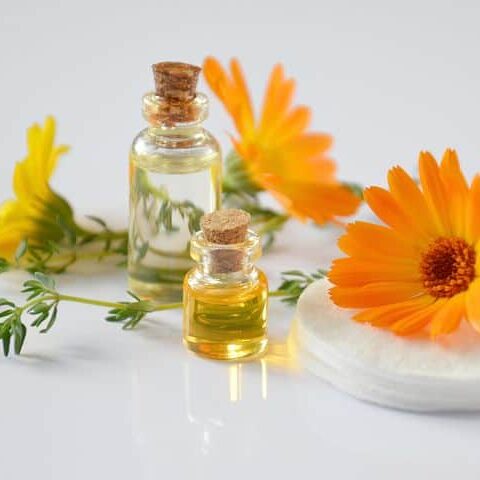
And so these two plants, calendula and plantain, are really good at healing damage in skin wherever you have it, but they do it in two different ways. And so if you can get your hands on both, it’s really cool to do that because then you get that broader spectrum of action. And if you only can get one of them, that’s also fine. And then I’m going to add here chamomile. Chamomile also has vulnerary action. It also has that healing action for any kind of wound, any kind of damage on the endothelial cells, also the epithelial cells. Chamomile also has relaxant action. And so if you are dealing with cramping, especially like lower digestive tract cramping. If you are dealing with also PMS cramping, which has nothing to do with inflammation in the digestive tract, but just as an aside also that. And if you are dealing with tension throughout the body, especially tension in the mind, but tension anywhere really. Chamomile helps relax the body.
(40:46):
But it needs to be strong. So, if you just have a chamomile teabag, and you dip it in, and then the tea is like lemony yellow, that’s not what I’m talking about. It has to be really dark so that it looks like black tea. It won’t look exactly like black tea, but it will look very close to that. So, we really want to get a bunch of chamomile in there and let it sit for a long time. And this blend, whatever herbs here that you take for this blend, we definitely want to let it steep for at least 20 or 30 minutes just to make sure that it is good and strong. So you’ll get that vulnerary action sooner, but that relaxant action to relax the cramping, and the tension, and the pain that’s caused by that tension, that comes with that longer steep. So, we really want to make sure to do that.
(41:40):
All right. Well, now we can add catnip. Catnip also has relaxant actions. It is antiemetic, which means if you feel nauseous or if you feel like a lot of heartburn coming up kinds of feelings, any of those upward movements, especially the not desirable upward movements out of the stomach, that is an area where catnip can really relax things down. So whether that is GERD, whether it is just reflux, whether it is heartburn, it’s kind of all the same, just different styles of the same problem. Or whether it’s outright nausea. Whether you deal with outright nausea because of stress, or tension, or whatever else, catnip is going to be a really good friend there. Really catnip is about pain in the upper digestive tract. Pain, discomfort in the upper digestive tract. Chamomile is more in the lower. Although because chamomile also has like a whole-body relaxant effect, you do kind of get more generalized action there. But catnip is really that upper effect. Catnip also has a relaxant action in the mind, especially if you are dealing with fear, or anger, or anxiousness that rises up out of the gut, then you will – bonus – get that calming action as well.
(43:18):
Okay. Let’s talk about some herbs that are carminative. Carminative means warming. And they are warming mostly because they are stimulating blood flow to the area. And this can be especially helpful if you are a person who holds a lot of tension in your belly, and you find it hard to digest food. No blood is getting to it. The more that we hold tension, the more that we’re like clamping things down, then blood can’t flow to wherever we’re tense. But if there’s no blood going to it, then kind of no work can get done. So, that is like one of the primary ways that these carminatives really help in that relaxing action. The first one I’m going to talk about here is ginger. Ginger is just plain hot anyway. When you put it on your tongue, it is just plain hot. But it has that circulatory stimulating action. It has that relaxant action. It also has an antiemetic action. So again, if you feel nauseous, ginger can be really helpful with that.
(44:33):
Ginger does not have that same action for like the heartburn, and reflux, and GERD. But for nausea and also lower tension and lower cramping, it’s really, really effective. Fennel is also warming, but it’s not warm. It’s not hot on your tongue. It’s warming by bringing that blood to the area. And fennel is also really helpful if there’s a lot of gas going on. It just can really make that whole situation a lot more comfortable. Also, it has relaxant actions. So again, if you’re holding tension, or if you’re feeling cramping in the guts, then fennel can be really helpful. Tulsi can be helpful here. It also has that carminative action of stimulating blood flow, plus you get the blood sugar benefits, plus you get the mood benefits. Plus it has a nice flavor. And if you were going to make this blend as it is, then adding tulsi in would be pleasant. It would taste nice. On the other hand, you could go in the other direction. You could put anything bitter in there. Now, some people really don’t like the taste of bitter things. And if that’s true, that’s totally cool. But if you don’t mind bitter flavors, actually bitter, anything that tastes bitter creates a feedback reaction in the body that stimulates digestion, efficient digestion, and makes sure that there is enough of all the different juices to do all the different jobs as the food moves through the digestive tract.
(46:18):
Okay. So any combination of those herbs, but especially make sure that you get a lot of those vulnerary herbs. Let that be at least one third, but even like a half or 40% of the formula. That is really going to help in terms of reducing the inflammation. So calendula, plantain, and chamomile, let those three be like at least 30, 40, even 50% of the formula. And then the rest can be however you want to mix it. Good. Okay. Well, there we go. Now we have reduced inflammation in the digestive tract, which has taken work off your internal to-do list.
Lymphatic Supporters
(47:04):
All right. There’s one more category here that I want to talk about, and that is lymphatic support. Lymphatic support creates instant inflammatory reduction because it is literally sweeping away the things that cause inflammation. Plus, when you get stagnant, that creates exhaustion. The more that things sit and stew, the more tired you get. So clearing stuff out, making sure all the fluids throughout your body are fresh all the time, prevents that exhaustion that comes from stagnation. Plus, if we are supporting the lymphatic system, we are automatically supporting the immune system because they are intertwined. You can’t separate the two. The immune system depends on the lymphatic system to function. So, any support that you give to the lymphatic, you are also giving to the immune. Plus, my favorite bonus here is that the more lymphatic support that you provide, the less puffiness throughout your body. And boy, perimenopause comes with a lot of puffiness, and it’s not awesome. So, anything to reduce that is fantastic. So, let’s have some herbs here. And here I’m going to list out the herbs in terms of their place in the body that they work best. And so if you’re always puffy in your legs, or if you have a lot of stagnation in your pelvic area, or in your trunk, or something like that, you can be like okay. Well, maybe I don’t have all the herbs on the list, but I know I really want that one.
(48:57):
All right. So, let’s start with self-heal. Self-heal is the all-over lymphatic support herb. From your brain to your toes, self-heal does it all. So, if you’re like I don’t know, I get some kind of puffy everywhere, get some self-heal. Okay, that sounds perfect, right? The one drawback is that sometimes it’s hard to find self-heal. And it is July, July 30th. And so it is actually the perfect time to buy some self-heal seeds. Because wherever you live, if you live in a place with a yard, or if you live in an apartment in the city, and all you have is some buckets, it doesn’t matter. This is the perfect time to start thinking about planting self-heal. The seeds really like to go through the fall and winter and then sprout the next year. And if you have only buckets, you can grow so much self-heal. And it flowers over and over. It’s a mint family plant. It doesn’t have a minty flavor, but it is in the family. And so it just makes more flowers all year round. So, it’s not easy to purchase. Sometimes it’s in stock and then stock up. But sometimes it’s out of stock. But the way to make sure that you will always have it is grow it. And it’s not hard once you get it going.
(50:22):
All right. So, then the next one is heather. Heather, wow, heather is a really important plant to me actually. On one hand, heather is stimulating lymphatic action, especially in the lower part of the body and the heart. So, if you have some cardiovascular stuff and some lymphatic stuff, especially if there’s like varicosities and whatever else. And that connection between the lymph and the heart is for you not a very strong part of your body. Then heather is a really great choice. I also find heather to be very helpful in terms of working with grief. Very, very soothing in working with grief. And I personally do not know a single person in menopause who is not managing some aspect of grief. Because I don’t think you can live for 52 years or whatever age you are at whatever stage of perimenopause you’re in. It’s a bunch of years, and I don’t think you can live that long without having some grief that you’ve got to manage. So, bonus there with the heather.
(51:38):
All right, red clover. It’s the flowers here not the leaves, the flowers. I mean, the flowers usually come with like one little leaf attached. That’s totally fine. But don’t just get a bag of just the leaves. Get the flowers because that’s where you’re really getting that lymphatic action. And red clover is for me, I always think of this as the trunk and the lower body. I know a lot of people kind of put red clover more in the all over category or even in the upper body category. And I can see reasons for categorizing it that way. But in my body I really find it to be super effective with lower body stagnation, lower body lymphatic support, and up into the trunk. It might be that I feel that so strongly because that is an aspect of red clover that I need. That is an aspect of lymphatic support that I need. But I also work with herbs specifically for lymphatic support in the head and in the upper body. And I just don’t usually feel that way about red clover. So, you can experiment with red clover, the flowers, and feel what you feel moving in your own body. But I want to be clear that I kind of have that in the lower body category. But you will see it in some books, or some other herbalists will feel like it’s a little bit more upper body. So, that’s kind of fun. It means you get to decide.
(53:21):
All right. Calendula here, which was in our digestive inflammation group. Calendula is really, really helpful for belly lymphatic movement. So, like if you’re dealing with a lot of bloating, almost all bloating is actually an immune response. That is lymphatic fluid. So, remember when you were a kid, remember last time you did puberty, and you felt sick. And so then somebody would feel your throat, the glands in your throat to see if they were swollen, the lymph nodes? And if they were swollen, then you got to stay home from school because that meant you were really sick, right? Okay. That’s what bloating is. That’s what bloating is. All the fluid, there are lymph nodes all around your intestines just twined all around them like beads. And when you are bloated, it’s because those lymph nodes are swelling because you’re having an inflammatory response to whatever you ate or whatever. So oh, does that put bloating in an entirely new light for you now? Yes, right? We need to take that seriously. But calendula is super helpful with that lymphatic movement.
(54:43):
Okay. And then I said herbs for lymphatic movement in the head and in the upper body. And for me that’s ground ivy and elderflower. One great perimenopause experience that I have to tell you I am thoroughly enjoying – I am not enjoying it at all – is a lot of puffiness in my eyes. I hate it. I hate it especially because I’m on camera all the time. And so now you can just look and be like oh yeah, Katja, you’re right. Your eyes are really puffy. I hate it. But when I’m consistent with ground ivy and/or elderflower, it gets so much better. And when I get busy, and I forget to take it, it gets worse. So, these are really, really helpful. They are also very helpful for me with a migraine or a headache. Again, because for me most of the time there’s a component of stagnation when I get a migraine or when I get a headache. And so if I can clear out that stagnation and get fresh stuff up into my brain, then that helps the headache go away. These two, ground ivy and elderflower, also really help when my mind gets stagnant. Whether that is like afternoon brain foggy kind of feeling. Or if it’s like emotional stagnation because I’m really stuck on a thing, and I’m not letting it go. These are really helpful there too. Anything you can do to bring freshness into your mind is going to move the needle emotionally as well as physiologically.
(56:22):
Okay. So there’s a pile of suggestions for you that don’t have anything to do with drinking more coffee, or ginseng, or rhodiola, or whatever else to give you more energy, blah, blah, blah, barf. You don’t have energy. You’re busy using that energy to remodel your body. And so let’s do something to take things off that renovation list so that at least you don’t have so much work to do. Yes, I want you to take a nap. I want magical cleaning fairies to show up at your house and also somebody to cover you at work so that you can spend the whole day sleeping. I want that for you. But I haven’t met those magical cleaning fairies yet. So until that happens then these are herbs that we can work with to try to reduce the internal workload so that we have more energy while we’re dealing with the renovations in our bodies that perimenopause is creating. So, this is the part of the podcast where Ryn would say take care of yourselves. Take care of each other. Drink some tea. And give yourself a little compassion and kindness because perimenopause is hard. And if you’re feeling tired, maybe what that really means is that somebody else needs to do the dishes tonight. Bye-bye.
Join our newsletter for more herby goodness!
Get our newsletter delivered right to your inbox. You'll be first to hear about free mini-courses, podcast episodes, and other goodies about holistic herbalism.