
Podcast 251: Disaster-Proofing Herbal Business Part 2: Offerings & Audience
This is the second half of the Disaster-Proofing your Herbal Business theme.
Economic uncertainty is part of business – but there’s so much you can do to make sure your business stays strong throughout the ups and downs.
In the previous episode, we covered the first three steps in the work of diversifying your revenue streams and your product/service offerings to make sure that your herbal business keeps growing!
In this episode, we’re talking about expanding both your offerings and your target audience so that you can broaden your reach into more markets. This takes some creativity and some market research, but don’t worry! It’s not hard to do and this episode has plenty of tips. The most important take-away is that if you stay flexible and try several different ideas at a small scale to see what gets traction, shifting your business with the economic conditions becomes a lot less challenging.
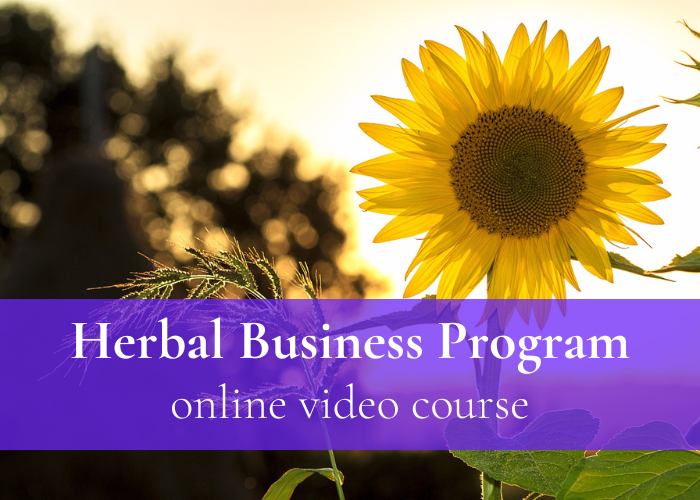
Most importantly though: you don’t have to do all this alone! Join our Herbal Business Program and let’s do it together! Not only will i personally help you, but you’ll also have access to our private community of herbal business folks – so that you get a nurturing peer support group as well!
The Herbal Business Program covers every aspect of GMP compliance, as well as every other part of running your business, from getting registered, paying taxes, and getting insurance to building your website and marketing without selling out – even hiring employees!
All of our courses include twice weekly live Q&A sessions and you can ask questions in the discussion thread attached to every lesson – we answer them ever day! Plus we have a student community where you can get support from other business herbies too!
If you have a moment, it would help us a lot if you could subscribe, rate, & review our podcast wherever you listen. This helps others find us more easily. Thank you!!
Our theme music is “Wings” by Nicolai Heidlas.
Episode Transcript
Katja (00:00):
Hi, I’m Katja. And I’m here at Commonwealth Holistic Herbalism in Boston, Massachusetts. And I’m here with another business themed, herbal business themed episode of the Holistic Herbalism podcast. Ryn is working on our chicken coop for our chickens, which I’m super excited. And I am going to talk to you some more about disaster proofing your herbal business. Actually, this would apply to any kind of business. But we’re herbalist here, so it’s your herbal business. Now, last time when we talked about disaster proofing your herbal business, which was a couple episodes ago, we were talking about getting to know your customers really well. Understanding what their priorities are, and what they’re going to spend money on, when dollars are tight, when their budget is tight. And then making sure that your offers and your products or your services – the way that you position them and what it is you actually are offering – are the things that they will see as essential when they are thinking about their budget. So, in other words, how do you make yourself essential? How do you make yourself, your products, your services, something that they feel like yeah, this is important enough that it is worth money, even in a tight budget time. And that’s just really good business too. If you are making products or services that are important enough to people that they will spend money on it even when their budget is tight, then you know you are doing really good work, right? So, it’s great all the way around. All right, So, that was really about shoring up and solidifying the customers you have. Or if you haven’t started your business yet – you’re still in the planning phases – the customers that you plan to have, right? Awesome.
Katja (02:23):
So, today we are going to talk about… Now that we’ve solidified the customers that you have or the customers that you plan to target, today we’re going to talk about how do you expand the customers that you reach, the customers that you serve, or clients. And that might be keeping the same demographic, the same kind of people. Like if you are right now targeting moms with kids for your business, then how do you target moms with kids, but more moms with kids instead of just the moms with kids that you already have? So, expanding the target audience that you’re already targeting. But then also, how do we think about new targets for our business? Like, are there other demographics that would want your products? Or are there similar products or services that you could create that new demographics would want, right? Now, remember in all of this, we’re going to stay in your lane, right? So, often stay in your lane is like an insult, but today it’s not going to be an insult. Today it is a buffer against burnout, right? So, if you think about stay in your lane at the most basic level. Okay, well when you’re driving, stay in your lane. Don’t be weaving around the road because that could cause an accident, right? Okay. So, we’re thinking about it that way, right? This is a safety thing. If you make herbal products, then even when the economy gets tight. Even when you’re thinking about disaster proofing your business, still be thinking about making products, right? Don’t try to expand into and I’ll see clients, and I’ll start teaching, and, and because you will burn yourself out. Also, it’s not legal. It’s against the GMP regulations. You should tell, or you should sell, but you shouldn’t do both.
Katja (04:26):
But even if it weren’t against the regulations, it’s just going to burn you out, right? Because making products is a full-time job and requires a great deal of creativity, and market research, and all that stuff to do a good job. Teaching or seeing clients is a full-time job. And so if you are out there, and you’re seeing clients. And you’re like maybe I should start a product line. No, you shouldn’t. You shouldn’t, because it will burn you out. It is easier for you to expand the work that you already are doing than it is to expand into a whole nother job, right? So, we just want to have you have one job. You’re already a self-employed, herbal business owner, right? So, you already have a lot of different jobs like your marketing, and your accounting, and you’re this, and you’re that, right? We don’t need to add another job to it. So, if you’re making products, what we want to do is expand the people who want your products. More people like the people you already have and more people who aren’t like the people you already have. If you are a clinical herbalist or a teacher, if you are providing any kind of service, then we want to keep doing that. That’s your job. But we want to expand the people for who would be interested in your service, right?
Changing Needs & Changing People
Katja (05:48):
All right, So, how are we going to do that kind of expansion? So, if you make products, the first kind of thinking here is how are people’s needs changing? As you are looking at new times, right, economic downturn is one kind of a new time. But also, you know, when COVID first came… when COVID first came on the market, whatever. When COVID first hit, that also was like a big kind of upheaval thing that created new needs. People had new needs. And so all right, we’re talking specifically about disaster proofing from the perspective of what about economic uncertainty. But economic uncertainty means that people’s needs change. So, the first thing we’re going to do is look at your customers. How are their needs changing right now? Earlier we were talking about okay, well maybe they don’t take vacations because they can’t afford that anymore. Well, can you create products that would facilitate a staycation? That would facilitate some sort of fancy spa-like weekend that would give people the feeling of a special experience, but for way less money than taking a vacation, right? So, that’s sort of one example of how you think about how are people’s needs changing right now.
Katja (07:20):
And then if you are going to expand into new kinds of customers. You’ve been working with moms with kids, but now you’re going to target other people, right? People who don’t have kids, maybe. Okay, well, what kind of products do they need? And of the products that they need, which ones are you really good at making? Or do you see something that they really need, and you think okay, well that is of interest to me. I would really enjoy making that. And I would enjoy putting in the research and development time into coming up with a really great product that people would enjoy. So, maybe up until now you’ve been working with moms with kids. But then you think okay, well I’d also like to target people who don’t have kids, or do have kids, or kids maybe don’t need to be the deciding factor anymore. And so something I could do to target specifically adults would be maybe to come up with mocktail blends that people would enjoy. To have fancy drinks that don’t have alcohol. That’s really exciting and trendy right now. And so that could be a place where you say yeah, I would love to expand into that area, right? So, that’s the first thing. Look at the customers you have, what are their needs? How are they changing? And then look at the customers you want to expand to. And say okay, well what do they need?
Katja (08:48):
What do they need in general? What do they need right now because of the way that the economic climate is changing? Then also, you can think about what do they need with regard to your offerings. Like not just the products that you make in general, but the way that you offer them to your customers. Maybe they would appreciate bundles or kits. Maybe you make some really great products. And if you put some of them together as a kit, it would become a vacation in a box, or a mother’s day in a box, or whatever. So, you could think about all the products that you already make. How do you present them? You might find that bundling them allows you to offer something at a discount, and then that becomes more attractive, right? Okay, well, if you just bought one thing, maybe the price was whatever it was. But in this three-pack then the price is decreased by whatever amount. And then that could be more attractive. So, we’re looking at all these kind of creative ways about what people need. How do we fill those needs, both with the specific products we’re making, and the way we are presenting them, the way we’re positioning them to our customers.
Making Services More Cost-Effective
Katja (10:06):
Okay. Now, if you’re a clinical herbalist, then it’s not about products. It’s about services. But it still is the same kinds of questions. How are people’s needs changing? Well, maybe in your area the health insurance or the health access is decreasing. And so more people need your services. And also more people need more affordable services. And so you start saying well, I could do group sessions. So, you could say all right, well, I’m really good at working on helping people with their chronic inflammatory disease. Okay. And so you say okay, well I’m going to offer a group session on chronic inflammatory disease. And so it can be like six people, and we’re all going to work together on it. That’s more cost-effective for you because you have a larger number of clients now. But you can offer your service at a lower cost per person because for you it’s still the same amount of time, but you’re working with more people. So, you can make more money for that time. But each individual person will be paying less than they would for a private session. Group sessions can be a really exciting option actually. It’s not just about making it more affordable. But a lot of people actually have more success in making lifestyle changes when they’re doing it with friends, when they’re doing it with a group of people. Or doing it with strangers who become friends. That is a really good way to help people build community around whatever it is that they’re working on in their health. And so it’s like it is offering a really good service and providing more affordability at the same time, right?
Katja (12:04):
So, these kinds of things to be thinking about. How can you be meeting the needs of the people around you more? So then in terms of the people around you in your community, you could also think about what about a wellness benefit for local businesses? And you could say okay, this could be something that you offer your employees. Especially if it’s a small business where they don’t offer health insurance because they’re such a small business. But they do want to offer something that is a benefit. What about a wellness benefit where everybody in the company who is enrolled in this program gets a session with you monthly? They’re not required to take it, but they have that option. The session cost is reduced. It’s paid by the company. But it’s okay for you. It’s safe for you to reduce it because not every person in the company is going to schedule a session every single month. So, you can charge a lower rate as your group rate per person because it won’t actually use 100% of the time, right? So, it averages out that you still are making the money that you need to make to support yourself even though each individual person in the program is not paying full price, right? And you could do a very similar thing as a family package. It doesn’t have to be just through businesses. You could offer family packages where a whole family has a plan. And then each month whoever in the family needs a visit gets a visit. So, that is a way to make it more affordable for the whole family.
Katja (13:52):
Or you even could work on package deals or bundles. You can bundle services. So, you could say okay, let’s do a three-month bundle. And we are going to work on whatever your health issues are for three months. Invest in yourself for three months of work to really see changes and build yourself stronger, healthier, whatever. But then again, you can make a little bit lower price on that bundle because you know you’re locked in for the three sessions. So, really this is about creativity. Creativity and presenting ways to meet people’s needs. Once you’ve established what your customers, what your clients need. Then you can think about okay, well what ways can I meet that and still make the money I need to sustain myself? But also be making things more affordable, more accessible, more desirable, more on target for what they need so that I’m sustained, and they are sustained?
Expanding Your Audience
Katja (14:58):
All right. So, when we’re thinking about how do we expand into a larger audience, more people who are not local to you. A lot of these ideas were kind of in your community ideas. Great, but how do we expand past the community and into the whole country, right? Because there are a lot of people who probably would love your products and services who don’t live anywhere close to you. Well, that’s going to involve marketing. And don’t panic on that one. The Herbal Business program has so much information about marketing, how to do it, all your different options. Free marketing, paid marketing, how to set it up, all that good stuff. But here is my number one tip to get you started, and that is start local. Get some ideas about what you want to offer. And when I say local, this also could be friends of yours who have moved away. They don’t live near you. That’s okay. It’s still local to you in terms of it’s part of your own community, right? So, start with the people in your community, the people that you know. And look at what you want to offer and how you want to offer it.
Katja (16:07):
And once you have some solid ideas around that, then plaster it out on the internet. Not just on your website. Like you can’t expect to put it on your website and have people find you. You’re going to have to tell them. But the way that you’re going to tell them is with a lot of flexibility and a lot of nimbleness. I’ll come back to that. Put your offering out there. Put it on social media. Put it on Google. Put it on wherever you hang out on the internet with a little bit of money behind it. And don’t put a ton of money behind it until you know that it gets traction. Okay, so now we’re back to that nimble part. When I say nimble, what I mean is create a low stress post that just says this is what I have to offer. This is why it would be great for you. And see what gets traction. And when you find that a particular offer is getting results, that’s the one that you’re going to put real money behind. The first time put like $10 behind it. Don’t spend a ton of money. And until you see oh, this one performed really well, okay, that’s the one that you’re going to really put some money behind so that you can get the word out there to people. Now there are so many tricks for growing your following, growing your reach on social media, on all the different kinds of social media. And there’s a lot of tricks for how you do paid marketing. How do you decide what to put money behind? And even just content-making ideas.
Katja (17:50):
So, in the Herbal Business program we spend a lot of time on this. And in our private study group in the student community, we also have just post your thing before you post it online. Post it here, and we’ll all critique it and tell you ways to make it better. And that way when you actually post it online, it’s already gone through a couple rounds of revision, and you know it’s really good before you put it up there. There’s no point in spending money on an ad that you don’t have any good feedback on to know that it’s actually good and going to get the job done, right? Otherwise you’re just kind of wasting money. So, that’s something that we spend a lot of time on together as a group supporting each other, talking about what makes a good ad, what would improve any specific ad, whatever. Don’t feel stressed that you need to figure all this stuff out yourself. It is something that comes with practice over time and really does get easier when you have a group of people helping you, and being creative, and giving you feedback as you go along.
Letting Market Research Drive Your Attachment
Katja (19:01):
All right. So, we have now talked about a lot of different ideas, a lot of different creative ways to expand. There are more ideas out there. You don’t have to stick with only these ideas, but this is going to be a lot of creativity. And the thing that drives creativity is research. So, you’re going to start with your friends, whether they live near you or whether you text them, or chat them online, or whatever. Talk to them about hey, what do the people in your community need? Because everybody overlaps, right? People in your community also belong to other parts of the community. And so asking your friends hey, what do you need? How can I be serving you? And then also for the communities that you are a part of that I might not be a part of, what do they need? How could I be serving them? So, just flat out ask. You can ask your customers too. You could create surveys for your customers. Now, don’t make them too long. That is a thing. If you’re going to send a survey to people, you are asking for their time. And so you want to streamline your survey as much as possible. And maybe you even offer take my survey and get a $5 off coupon, something like that, to compensate them for their time, their opinions, and all that stuff. So, okay. So, a little compensation is nice for a survey. But it’s completely valid, completely legitimate to just talk to your customers and say what do you need? Times are changing. How can I serve you? That’s going to get so many ideas for you.
Katja (20:51):
And then lastly, you know, you’ve researched a bunch of stuff. You’ve brainstormed a bunch of stuff. You’re not going to know what works until you try it. So, just throw stuff out there, but don’t be too committed to it. Make a small batch of something. Make an offer for it. See if it works. And if people like it, awesome. Keep going. If people aren’t too into it, then don’t be too attached to it. In this kind of economic sort of time – that’s the technical term there – it’s true. You are going to be just trying stuff to see what works. And that means don’t put all your eggs in one basket, and don’t be too attached to any one idea. Boy, I’m going to really sound like a capitalist here. Here we go. Let the market drive what you get attached to. Ah, but it’s true, right? Let your customers tell you what they want you to get attached to. Let your customers tell you what ideas are good and which ideas you can just shelf. You could come back to them later. It’s okay. If there’s an idea that you really love, and it doesn’t really do well in the market, then fine. Just put it aside or find the market for that product or service that you really enjoy making. Also totally good. So, a few other creative ideas here. Try different types of bundles. Try different sorts of packages, kits, different bundled services. Just try them. It’s not bad to try something. Offer it. See if people like it. And then if they don’t, stop offering it. You are not locked in just because you tried something.
Katja (22:52):
So, I feel like a lot of times we feel as businesspeople that if you put something out there, it’s some kind of commitment that you have to always have that thing available. But that’s not actually the case. Put something out there and see if people like it. If they don’t like it, don’t do it. Just stop doing it. It’s completely fine. If they don’t like it, try a new thing. But the big thing here is be really flexible. Be nimble. Be trying lots of things. If you put something out there, and it doesn’t get traction, try something else. Don’t wait, just try something else. Or if you put something out there, and it doesn’t get traction, put it in front of other people. Because maybe the idea was good, but the people that you put it in front of were not the people who want that idea. Either way we’re talking about flexibility. We’re talking about the mind game of not getting disappointed because you had an idea, and it didn’t get traction. If you let that grind you down, then being in business is going to be pretty depressing. And that’s no good. So, instead just throw it out there. Put lots of ideas out there and see which ones stick. And if something doesn’t stick, don’t be sad it didn’t stick. Just pivot as fast as you can. Just say great, no problem. I’m going to try it this way. No problem, I’m going to try it that way. If you make that your motto, then you can get excited when something does stick instead of getting disappointed when something doesn’t stick, right? If you just are telling yourself I’m just trying stuff. I’m just going to see what people want. I’m just going to see what appeals to people. And if this isn’t it, I’ll try something else.
Being Okay With Not Every Idea Working Out
Katja (24:53):
If that’s your attitude going through this, then the whole thing is going to be so much more comfortable. And it will be a lot easier to be creative. If you put an idea out there. And then it doesn’t really get traction, and then you feel really bad about it. It’s going to be hard to make a new idea. And it’s going to be intimidating to then try and offer it. Because you’re going to be like oh no, they didn’t like the last idea, So, maybe they’re not going to like this idea and it’s going to make you drag your feet and feel just kind of stuck in the mud about doing the next try. That’s the thing that we really need to avoid. You will find something that sticks if you keep trying. And if you keep your sort of attitude in that I’m flexible, I’m creative kind of cheerleader place for yourself. And we do that by just recognizing that not every idea is going to be popular. Not every idea is going to work.
Katja (26:02):
I know I’m kind of getting a little into the psychological realm here, like the psychology of being a small business owner. But I feel like it’s kind of important. Because it’s really easy to get discouraged, especially when you’re a solo business owner, and you don’t have people around you maybe saying this is a wicked good idea. Oh, that maybe isn’t the best idea. We should try something different. If you don’t have that kind of support, and you’re just trying stuff yourself. It is so easy to get discouraged when you put something out there, and it doesn’t stick right off the bat. So, I guess that’s why I just feel like it’s important to kind of talk about that, and be really upfront about it, and kind of inoculate yourself against the reality that not every idea is going to be popular.
Katja (26:55):
Not every idea is going to get traction. If you know that going in, and you’re prepared, it’ll be a lot easier for you to stay positive, and creative, and flexible and move on to the next idea. And that’s what I want for you. So, that’s it. It’s really just about the creativity of all of it. And again, you don’t have to do this alone. Join us in the Herbal Business program. Get access to the Business study group. You have me right there the whole time helping you with all this stuff, but also this whole group of herbal businesspeople who also can be giving you feedback, helping with ideas, helping you build suggestions. Being successful in business is about having a strong community of support. And a lot of times, especially in this country, we think I have to go it alone. I don’t want to talk about my ideas to anyone because that’s my competition or all these different things. None of that stuff is true. You don’t have to go it alone. And we are a community. There are so many people who need herbs, who need herbal products, who need herbal services. There are so many people. We don’t actually have to compete with each other. There aren’t enough of us to meet the need, in fact. So, let’s just come together and support one another in all of our different ideas, in all of our different regions, all the places where we are. And that way you feel like you have a net to fall back on, which is better than trying to go it alone. All right. Well, Ryn and I will be back with more Holistic Herbalism podcasts pretty soon. So, until then drink some tea and do all those other fun things that he always says at the end of the podcast. And we’ll see you soon. Bye.
Join our newsletter for more herby goodness!
Get our newsletter delivered right to your inbox. You'll be first to hear about free mini-courses, podcast episodes, and other goodies about holistic herbalism.