
Is Ground Ivy Toxic?
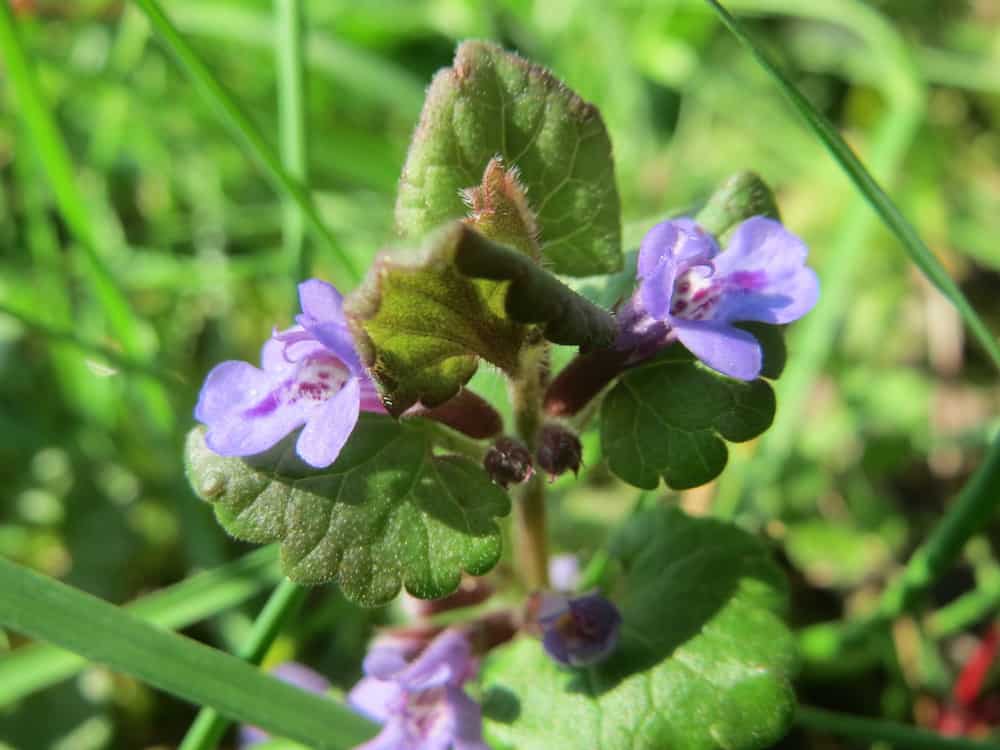
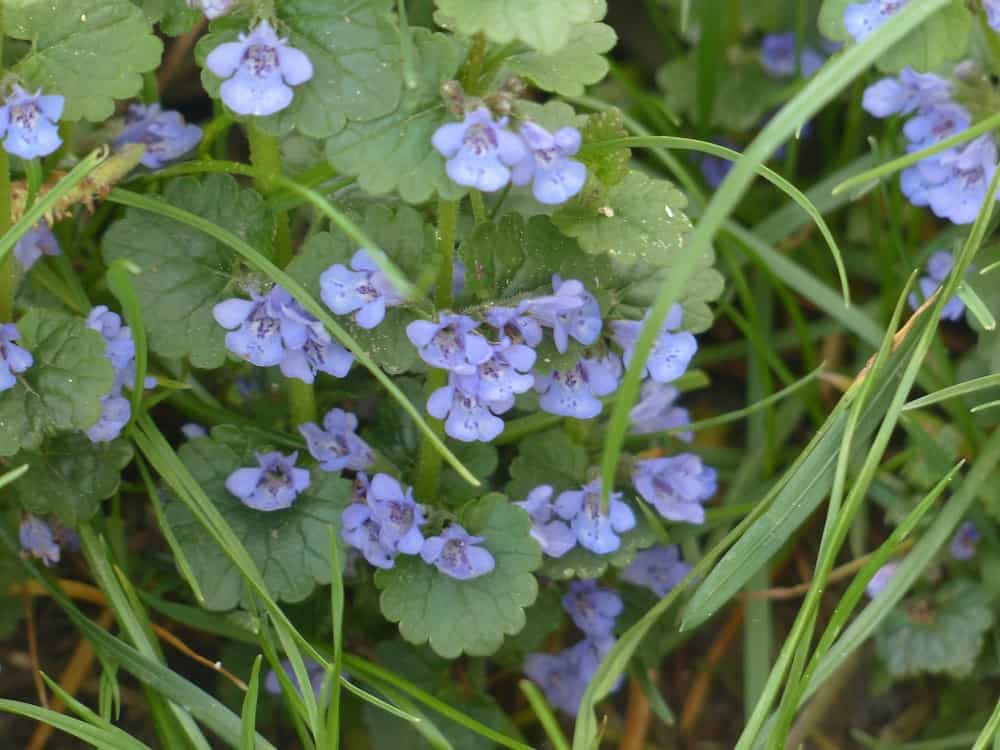
Some time ago, a student reached out to let me know she’d seen some information about potential toxicity of the herb ground ivy (Glechoma hederacea). This herb is also known as creeping charlie, gill-on-the-ground, and alehoof – and it’s one of our favorites here at CommonWealth! So, I wanted to double and triple-check this concern. So, then: is ground ivy toxic?
Short answer: no.
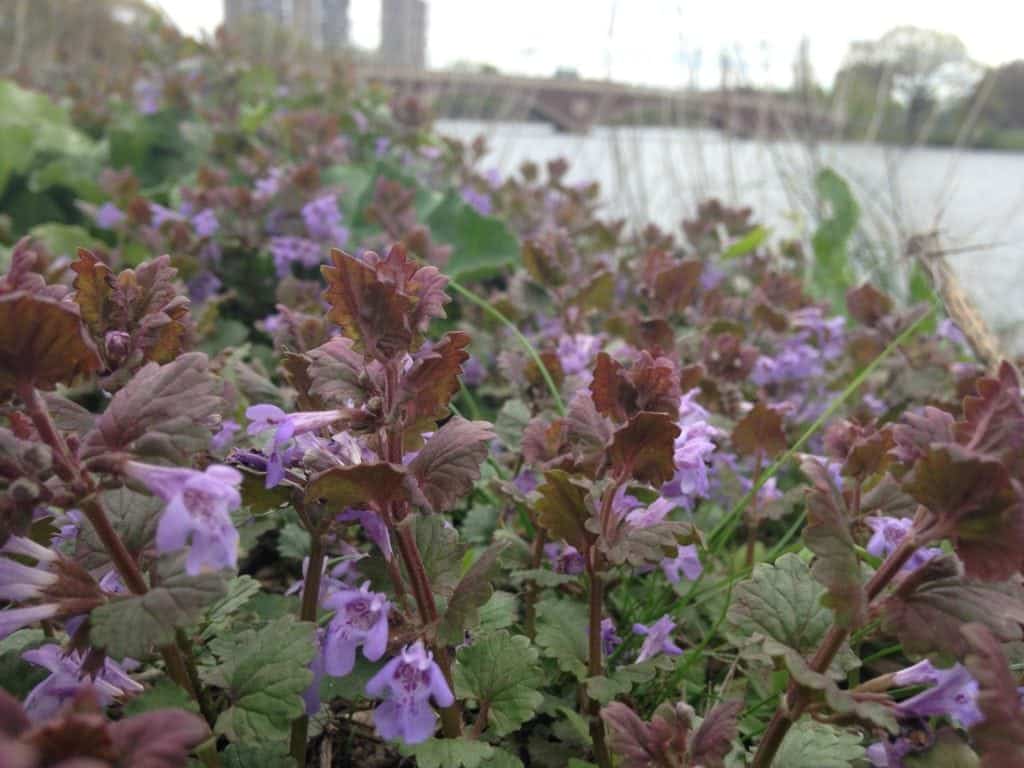
Long answer: buckle in, here we go!
Pyrrolidine Alkaloids in Ground Ivy
Pyrrolidine alkaloids can exert some toxicity, though not as much as their more famous cousins, the pyrrolizidine alkaloids. Those latter are found in several herbs, including coltsfoot and comfrey, and can be quite serious.
This is the first of two documents my student sent me: SUOMALAISTEN LUONNONVARAISTEN KASVIEN ELINTARVIKEKÄYTTÖHISTORIATIETOJA. It’s in Finnish, but you can see where they indicate the potential presence of pyrrolidine alkaloids in Glechoma hederacea, on page 7.
Their source for that is another report, found here:
https://www.efsa.europa.eu/en/efsajournal/pub/2663
The fulltext is available at sci-hub here:
https://sci-hub.se/https://doi.org/10.2903/j.efsa.2012.2663
This report indicates: “Pyrrolidine alkaloids linked with a tropane-like skeleton: e.g. hederacines A and B . Essential oil from flowering aerial part : monoterpene etheroxide: 1,8-cineole (1.9 – 4.6%)”, with the following references:
- Cooper M.R. and Johnson A.W. 1998, Poisonous plants and fungi in Britain. Animal and human poisoning. The Stationery Office. ISBN 0-11-242981-5.
- Kumarasamy Y. et al. 2003. Isolation, structure elucidation and biological activity of hederacine A and B, two unique alkaloids from Glechoma hederacea . Tetrahedron 59, 6403-6407.
- Mockutë D. et al. 2005. Chemical composition of essential oils of Glechoma hederacea L. growing wild in Vilnius district. Chemija. 16(3-4), 47-50.
- Radulovic N. et al. 2010. Volatile constituents of Glechoma hirsurta Waldst. & Kit. and Glechoma hederacea L. (Lamiaceae) Bull. Chem. Soc. Ethiop. 24(1), 67-76.
The Kumarasamy paper has more on the pyrrolidines. Fulltext at sci-hub. From 135 g of plant material, they extracted 3.8 mg of hederacine A, and 3.2 mg of hederacine B. That means these represent 0.00281% and 0.00237% of the plant’s weight, respectively.
For comparison, comfrey root’s PA content is often cited as ranging from 0.013% to 1.2%. So there are somewhere between one and three orders of magnitude difference between comfrey root and ground ivy leaf, in terms of PA concentration.
Also, remember that there’s a significant difference between pyrrolidine and pyrrolizidine alkaloids, the latter of which are more dangerous, and are not found here in Glechoma.
Volatiles: Human Toxin or Horse Toxin?
This is the other link my student found and sent to me:
https://www.webpages.uidaho.edu/range/toxicplants_horses/Toxic%20Plant%20Database.html
This one is a list of plants which are toxic to horses, not to people! Horses, like cats, cannot metabolize volatile oils in the same way we can. If they graze on plants rich in them, it can cause problems.
While ground ivy isn’t as rich in volatiles as something like pennyroyal, it has enough that it can be a problem for the horse if a significant amount of their feed is ground ivy. But it doesn’t mean humans have any of that same trouble.
I would of course say no one should ingest essential oil of this plant, just as they shouldn’t ingest the essential oil of pennyroyal; and neither of those have much of anything to do with herbal tea from these plants.
Glechomin – A Putative Toxin in Ground Ivy?
The putative constituent “glechomin” is indicated as the known toxin in that list of plants dangerous to horses. It’s also occasionally referenced in some monographs, like this one (where it is indicated as a name for the ‘bitter principle’ of the herb).
It is not, however, a constituent that seems to be recognized scientifically at present. Zero results at PubChem or at PubMed.
It seems to me that “glechomin” was either a placeholder name or a previously theorized molecule which has not been further characterized.
Other Possibilities for Ground Ivy Toxicity
I did come across some info on a lectin in Glechoma leaf, but this is probably not significant.
My student recalled a note in the Peterson Field Guide to Medicinal Plants and Herbs of Eastern and Central North America, by Foster & Duke. I checked this in my copy.
They mention the toxicity to horses, and one case of a human who had throat swelling and labored breathing after drinking a cup of fresh plant tea. To me, that sounds like one of the frustrating “idiopathic” allergic reactions, which can happen with any plant at all, and is not considered a matter of toxicity but of allergy.
The Verdict: Ground Ivy Is Not Toxic
Considering the info above, it looks like ground ivy’s “toxicity” amounts to:
- Insignificant amounts of pyrrolidine alkaloids
- Substantially lower volatile content than other mint family plants
- Nominal “toxins” which do not seem real
- Rare potential for allergic reactions – just like any other herb
So, my takeaway is that I am not at all worried about consuming Glechoma leaf as tea or as tincture. Phew!
Join our newsletter for more herby goodness!
Get our newsletter delivered right to your inbox. You'll be first to hear about free mini-courses, podcast episodes, and other goodies about holistic herbalism.